Why it is written this way
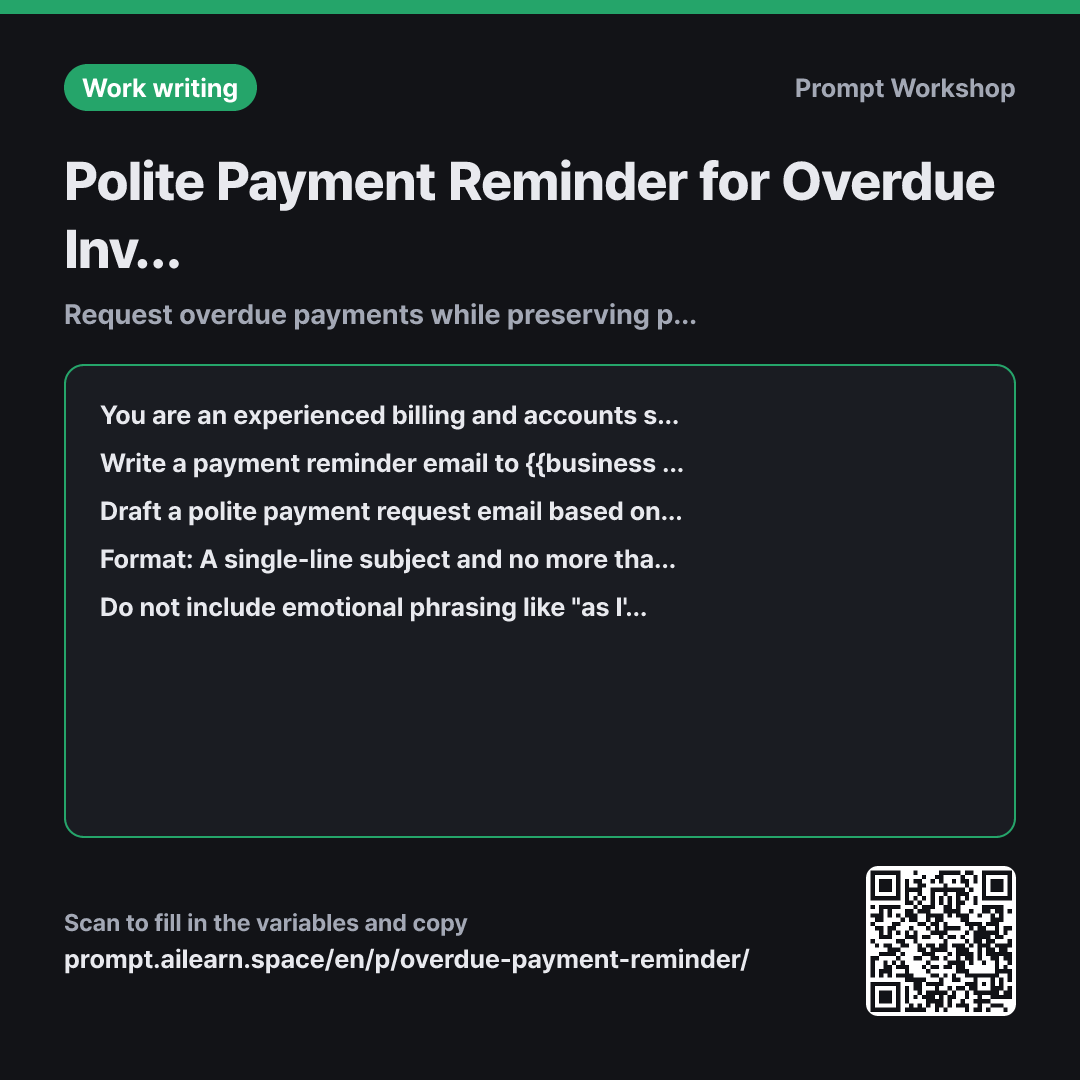
When drafting an overdue payment reminder prompt, emotion is the primary risk. When payment is weeks late, frustration easily leaks into the writing, turning a routine accounting issue into a damaged relationship. Conversely, writing too cautiously results in vague phrasing like "whenever you get a chance," pushing your invoice to the bottom of their processing queue. This prompt removes emotion while keeping amounts and deadlines crystal clear.
Setting the role in the first paragraph as an "experienced billing and accounts specialist" ensures the email reads as standard operational protocol rather than a personal complaint. Without a role, the model fluctuates between pleading and demanding tones. In the context paragraph, noting that "this delay is likely not the fault of the recipient" prevents the recipient from going on the defensive. In reality, delayed approvals or processing errors are often the culprit.
Starting the task with a fact-check is the most effective approach in payment reminder copy. Inquiring whether any paperwork is missing prompts the recipient to actually check their billing system to reply, initiating the payment process. Limiting numerical details to appear only once in the format constraints avoids making the email feel aggressive or overwhelming.
Finally, the constraints prevent two critical errors: emotional friction and hallucinated data. If the model arbitrarily threatens legal action or late fees, a simple reminder escalates into a dispute. The same applies to using bracketed placeholders for bank details and contract numbers—sending an invoice email with plausible-looking fake details can lead to severe operational mix-ups.
Unfamiliar terms? See Aha AI: role-prompting, hallucination
Compared with a bad example
Payment is overdue, write a polite reminder email.
Without specific amounts and dates, the model generates vague phrasing like "last month's balance" or invents numbers. The recipient wastes time figuring out which invoice is referenced, and without a requested deadline, processing is delayed again. Overemphasizing "polite" often creates overly submissive phrasing that obscures the actual request.
Variations
Second Reminder After No Response
Write a follow-up payment reminder to {{business client}} since our previous email received no response. The balance is {{outstanding amount}}, original due date was {{original deadline}}, and requested payment date is {{request deadline}}.
Reference the previous notice without blaming them, and format the necessary checks into a structured list. Ask three single-line questions regarding invoice receipt status, internal approval progress, and the estimated payment date, formatted so the recipient can easily fill them out to reply.
For a second reminder, replacing repeated requests with a structured, easy-to-answer questionnaire works better. It quickly uncovers where the payment is stuck in the pipeline.
Freelancer to Individual Client
Write a payment reminder message to {{business client}} for completed freelance work. The balance is {{outstanding amount}}, the original due date was {{original deadline}}, and the requested payment date is {{request deadline}}.
This is sent by an individual rather than a corporation. Avoid overly rigid formal business language while keeping the amount and dates precise. Keep it under three sentences and leave account details as [Bank Account Details].
Overly corporate language feels awkward in individual-to-individual transactions. This variant softens the tone while keeping financial figures and deadlines intact.
Model notes
When models rewrite financial figures, units or formatting digits can occasionally shift. Double-check before sending to ensure that all amounts and dates match your actual invoice records.
Related prompts
Last updated 2026-09-02 · Found a mistake? Let us know