Why it is written this way
Two common issues arise when asking AI to revise emails: the AI hallucinates commitments not in the original text, or it becomes so excessively apologetic that the core request gets buried. This prompt is engineered to prevent both failure modes.
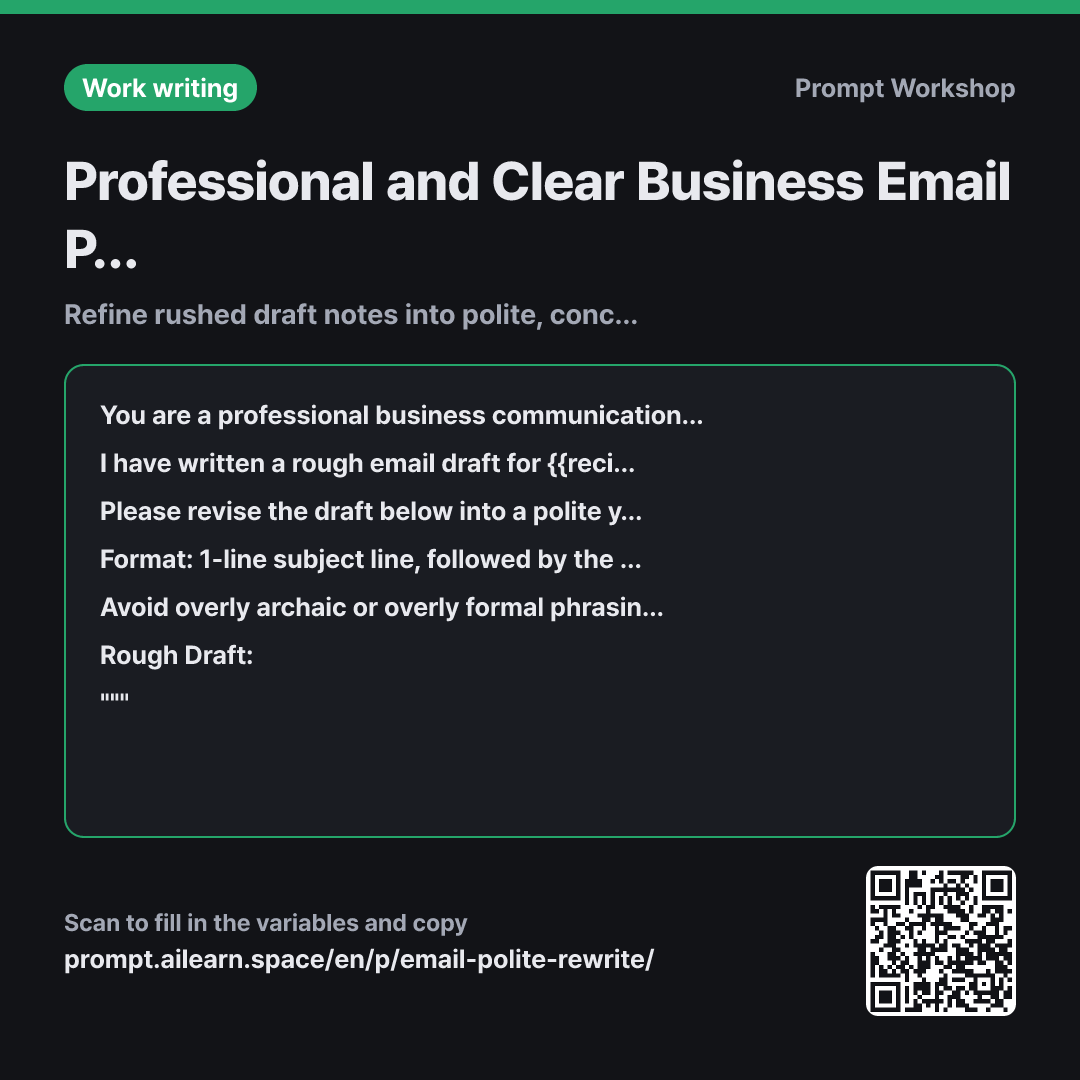
Setting the Role as an expert business communication coach ensures modern, professional workplace standards rather than overly flowery prose. Specifying the Context with the recipient and situation allows the model to strike the exact right tone and level of formality. Even with the same rough draft, communicating with an internal supervisor versus an external client requires different nuances.
In the Task paragraph, the explicit rule "Do not invent new facts" stops the AI from hallucinating unapproved concessions (such as "We will cover any extra costs"). The Format constraints limit the length and structure, countering the AI's tendency to mistake length for politeness.
In the Constraints section, requiring a clear "what and by when" ensures the recipient can act immediately without needing follow-up clarification. Enclosing the draft in """ prevents the model from mistaking draft sentences as instructions.
Unfamiliar terms? See Aha AI: role-prompting
Compared with a bad example
Make this email polite.
(paste draft)
Without context on the recipient or situation, the AI defaults to generic, overly formal filler. The result is often vague and needlessly wordy, and without length constraints, it tends to double the size of the original text.
Variations
Polite Rejection Email
You are a professional business communication coach. I need to decline a request from {{recipient person}}. Context: {{current situation}}
Please revise the draft below into a polite yet firm email that clearly communicates the rejection without burning bridges. State the reason in one sentence and offer an alternative or compromise if feasible. Include a 1-line subject line + body of around 100–120 words.
""" {{rough initial draft}} """
Vague rejections invite repeated follow-ups. Specifying a "clear rejection" and "one alternative" preserves goodwill while keeping boundaries firm.
Converting to Global Business English
Please convert the rough draft below into a professional English business email for {{recipient person}}. Context: {{current situation}}. Follow standard English business communication conventions by stating the primary purpose in the first sentence, keeping the total body to around 100–120 words. Below the email, provide a 2-line explanation highlighting key tone or structural adjustments made.
""" {{rough initial draft}} """
English business writing prioritizes putting the main purpose upfront. Asking for a summary of changes helps the user learn communication norms for future emails.
Related prompts
Last updated 2026-09-02 · Found a mistake? Let us know