Why it is written this way
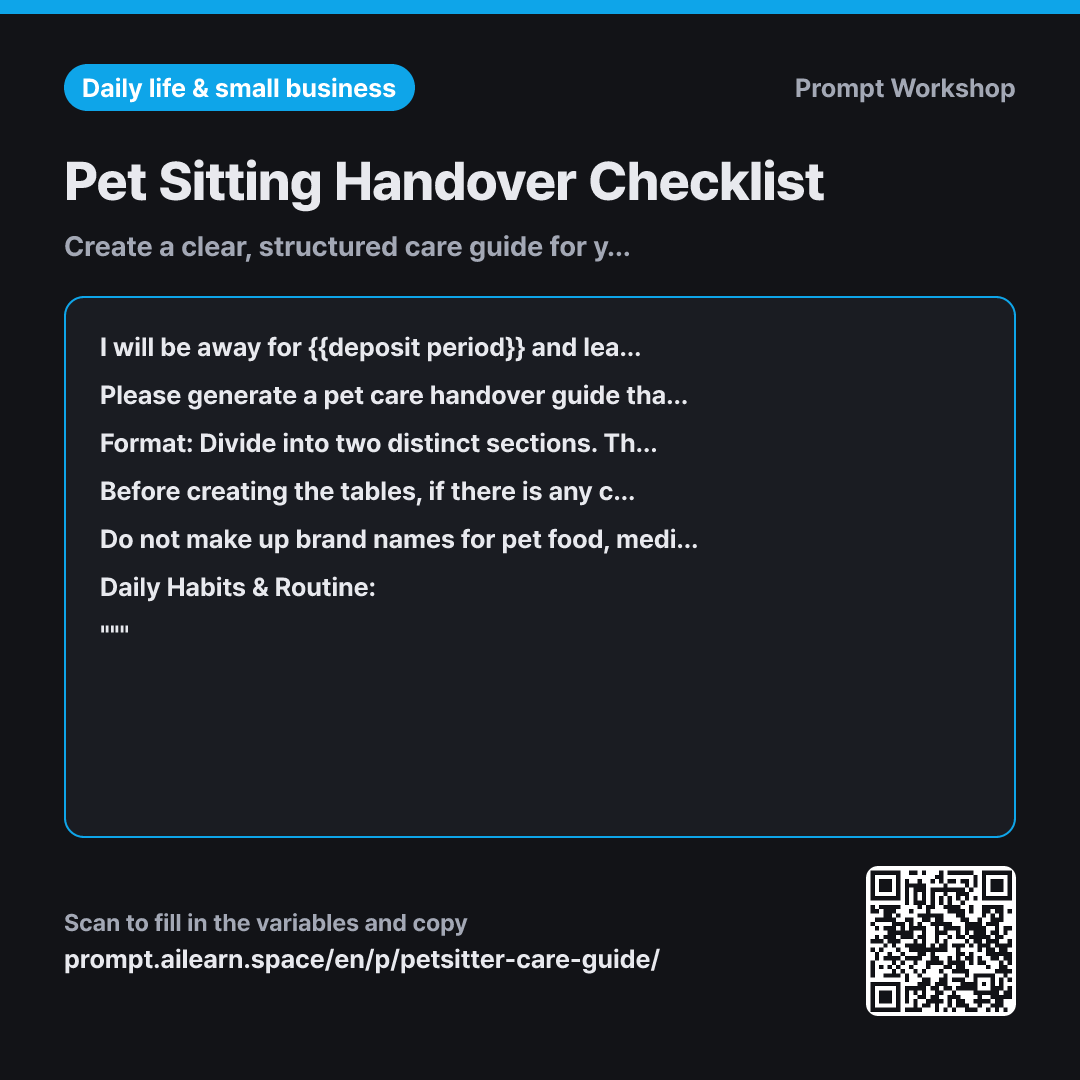
Pet care instructions are often hastily shared in a 5-minute conversation at the front door. As a result, basic daily chores are communicated, but critical emergency details—such as who to call or specific sound triggers—are left out. This prompt strictly separates routine care from emergency procedures.
The Task instruction requesting details that an owner might "forget to mention out loud" does heavy lifting. Without this, AI merely rephrases the habits you provided into plain sentences. A pet sitting memo becomes truly valuable when the AI adds safety considerations you might have overlooked.
Specifying the Format as two distinct tables serves the same purpose. Long paragraphs force a sitter to scan through dense text in the middle of the night. A table with a time column helps them track tasks visually throughout the day, while an emergency table allows instant lookup by scenario.
Placing the daily routine at the end inside """ creates a clear boundary. Descriptions of pet habits are often unstructured and wordy; separating them from instructions ensures the AI treats your text strictly as reference data without confusing prompt constraints.
The Clarifying Questions section prevents missing critical details (like entry codes or vaccination status) while capping inquiries at 3 to avoid endless back-and-forth. Finally, the bracket placeholder rule stops the AI from hallucinating fake clinic names or contact numbers, and barring specific medical treatments ensures veterinary decisions remain with licensed professionals.
Unfamiliar terms? See Aha AI: output-format, prompt
Compared with a bad example
I'm leaving my dog with a pet sitter for 4 days, write me an instruction guide for the sitter.
Without specific details about the pet, the AI produces generic advice like "walk twice a day" and "provide plenty of water," which offers zero actionable value. Furthermore, the AI might hallucinate plausible-looking vet names and phone numbers, which could lead to calling the wrong number during a real emergency.
Variations
For indoor cats (no walks)
I am leaving my {{age value}} {{pet type}} for {{deposit period}}. This pet does not go on walks.
Please generate a handover memo focusing on litter box maintenance, food/water replenishment, and guidelines for giving the pet space when they hide. Structure it into three categories: "Daily Tasks / Once-a-Day Checks / Things to Avoid/Do Not Disturb".
Daily Habits & Routine: """ {{meal walking habit}} """
For cats, care revolves around litter management and respecting personal space rather than outdoor walks. Changing the category headers completely tailors the table output.
Short fridge note for single-day care
I am asking a neighbor to watch my {{pet type}} for just today. Based on the routine below, write a short note to stick on the refrigerator within 8 lines. Keep only the time and task, omitting lengthy explanations. Leave contact numbers as bracketed blanks.
""" {{meal walking habit}} """
Two full tables are overkill for a single-day favor. Restricting the output line count keeps only the bare essentials.
Related prompts
Last updated 2026-09-02 · Found a mistake? Let us know