Why it is written this way
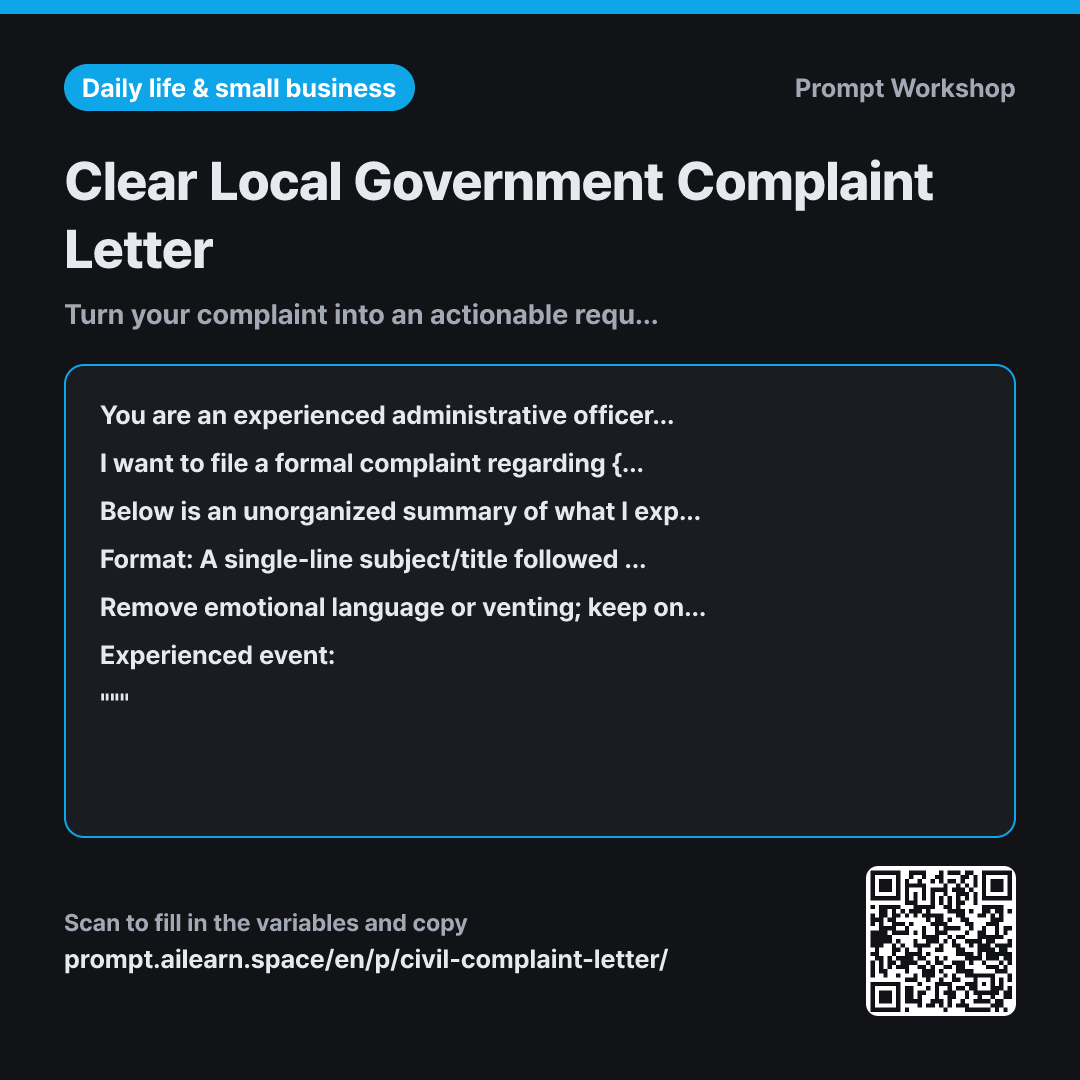
It is rare for formal complaints to fail because the citizen lacks writing skills; most fail because they contain too much venting and unorganized information. When events are dumped without structure, the reviewing officer cannot easily identify what or where to inspect, leaving the ticket idling with a boilerplate auto-reply. This prompt exists solely to turn frustration into clear, actionable data.
Assigning the Role of an experienced municipal officer accounts for half of this prompt's success. Viewing the text through the processor's eyes clarifies what is truly essential: exact location, physical condition, time of day, and specific requests. Without this role, the AI tends to echo the user's emotional grievance—resulting in an expressive but ineffective letter.
Setting the Format into four discrete sections mirrors standard municipal and 311 portal intake forms. This structure also helps highlight any missing information at a glance. The final 3-bullet checklist ensures the citizen performs a quick quality check before hitting submit.
Under Constraints, two protective mechanisms are in place. First is the anti-hallucination rule: inventing dates or street numbers ruins credibility and misguides field inspections. Second is the ban on legal conclusions. AI models often invent incorrect statute citations or fine amounts with high confidence, which distracts from the core facts. Wrapping the user's notes in """ ensures the AI treats them purely as source material rather than instructions.
Use this prompt strictly for refining text. Determining specific legal jurisdictions or choosing between an informal inquiry and a formal report remains the responsibility of the relevant administrative office. Fill in any bracketed placeholders [ ] before submitting.
Unfamiliar terms? See Aha AI: role-prompting, output-format
Compared with a bad example
Write a complaint letter to the city hall for me.
(paste raw notes)
Without a specific location or requested action, the AI generates a generic letter ending with vague phrases like "Please address this as soon as possible." The case officer won't know where to dispatch an inspector or what remedy is requested, delaying resolution. The AI might also hallucinate incorrect municipal codes, damaging the credibility of the entire claim.
Variations
For HOA / Property Management Office
I am experiencing an issue regarding {{complaint target}} at {{occurrence location}}. Please draft a polite formal request to submit to the property management / HOA office. The desired action is {{desired action}}.
Instead of rigid bureaucratic language, use a clear, polite tone written from the perspective of a fellow resident. Structure it with three sentences describing the situation and two sentences outlining the request (around 100 words total). Avoid pointing fingers at specific individuals or units.
Experienced event: """ {{experienced event}} """
Using overly bureaucratic legal language with a property manager can alienate staff. This variant softens the tone while preventing personal accusations.
When a Previous Complaint Remains Unresolved
I previously submitted a complaint regarding {{complaint target}} at {{occurrence location}} and received an official reply, but the issue persists. Please draft a follow-up complaint.
Summarize the previous response in one paragraph and the ongoing unresolved facts in a second paragraph. State clearly what needs to be verified this time around {{desired action}}. Do not blame the previous case officer; describe only factual conditions that remain unaddressed after the initial action. Leave placeholders like [ ] for the previous response date and case reference number if not specified.
Experienced event: """ {{experienced event}} """
Follow-up complaints must focus on 'what remains unaddressed' rather than 'why isn't this done yet.' This variant strips out blame to push the ticket to the next escalation tier.
Related prompts
Last updated 2026-09-02 · Found a mistake? Let us know