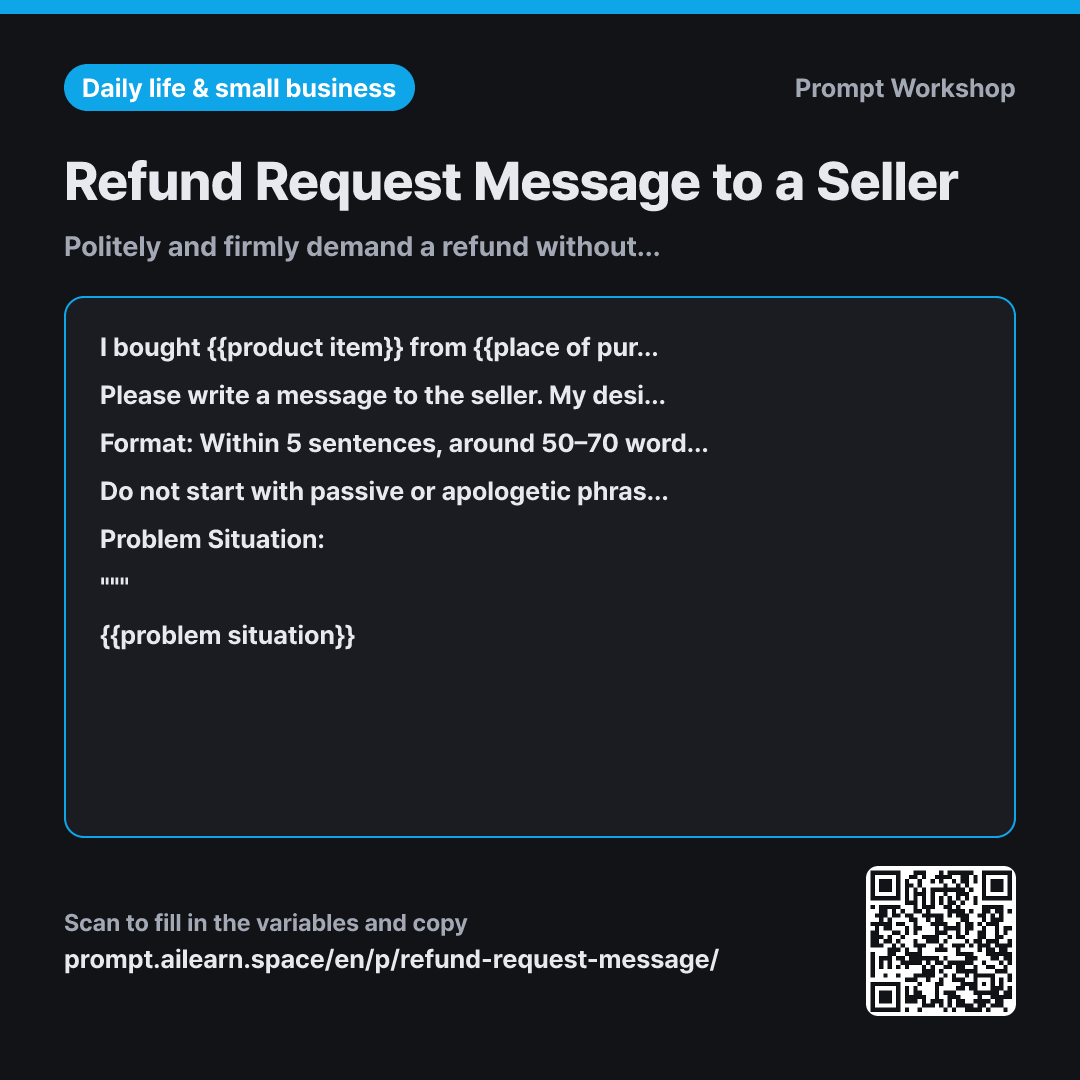
Why it is written this way
The real struggle when drafting a refund request isn't vocabulary—it's the opening tone. Messages starting with "Sorry to trouble you" invite replies like "Sorry, but we cannot help." This prompt sets a structured sequence that maintains politeness without diluting the core demand.
The Context section requests the place of purchase because tone and required details vary by channel. An e-commerce seller needs the order ID and deadline first, whereas a peer-to-peer transaction requires a bit more conversational cushioning. Including both the product and the problem situation prevents the AI from hallucinating the nature of the defect.
In the Task section, defining the desired processing upfront is vital. Without it, messages default to vague requests like "Please let me know," prompting sellers to offer partial refunds or store credit that favor them. Setting a response deadline serves the same purpose—without a timeframe, delaying has no downside for the seller.
The Constraints block guards against three pitfalls: overly submissive language, emotional accusations, and AI hallucinations. Leaving unmentioned order numbers or amounts as blanks prevents costly errors that stall support verification. Instructing the AI not to judge legal validity keeps the text strictly focused on the immediate operational request.
Before sending, check two things: ensure all bracketed placeholders are filled with your details, and make sure the very first sentence makes your request crystal clear.
Unfamiliar terms? See Aha AI: context-window, prompt
Compared with a bad example
Write a refund request text for me. I bought a dining table and it arrived cracked.
(paste chat log)
Lacking a clear resolution and timeline, the AI generates a passive message ending in "Please let me know what to do." Sellers face no urgency and will likely reply days later with a generic brush-off. Apologetic opening phrasing often reduces a legitimate claim to a humble favor.
Variations
For Peer-to-Peer / Used Item Deals
I bought {{product item}} from an individual seller on {{place of purchase}}, but an issue has occurred. My desired resolution is {{desired processing}}.
Considering the counterparty is an individual rather than a commercial seller, write a polite yet definitive message. State how the defect was discovered in one sentence, frame the requested resolution as a direct proposal, and specify a clear deadline for their response. Total length around 40–50 words.
Problem Situation: """ {{problem situation}} """
Peer-to-peer disputes are often driven by emotion rather than corporate policy. This variant softens the tone into a clear proposal while firmly keeping the deadline.
Follow-Up When There Is No Response
I previously sent an inquiry regarding {{product item}} on {{place of purchase}}, but I have received no response. Please write a follow-up message. My desired resolution remains {{desired processing}}.
Summarize in one sentence what was requested previously and when, then calmly state the next step/channel I will escalate to if I do not receive a reply. Keep the tone factual and composed rather than overtly hostile. Total length around 40–50 words. Leave any unstated dates as [ ].
Problem Situation: """ {{problem situation}} """
Follow-up messages get results when they outline next steps. Stating escalation channels calmly keeps the line of communication open without triggering immediate defensiveness.
Related prompts
Last updated 2026-09-02 · Found a mistake? Let us know