Why it is written this way
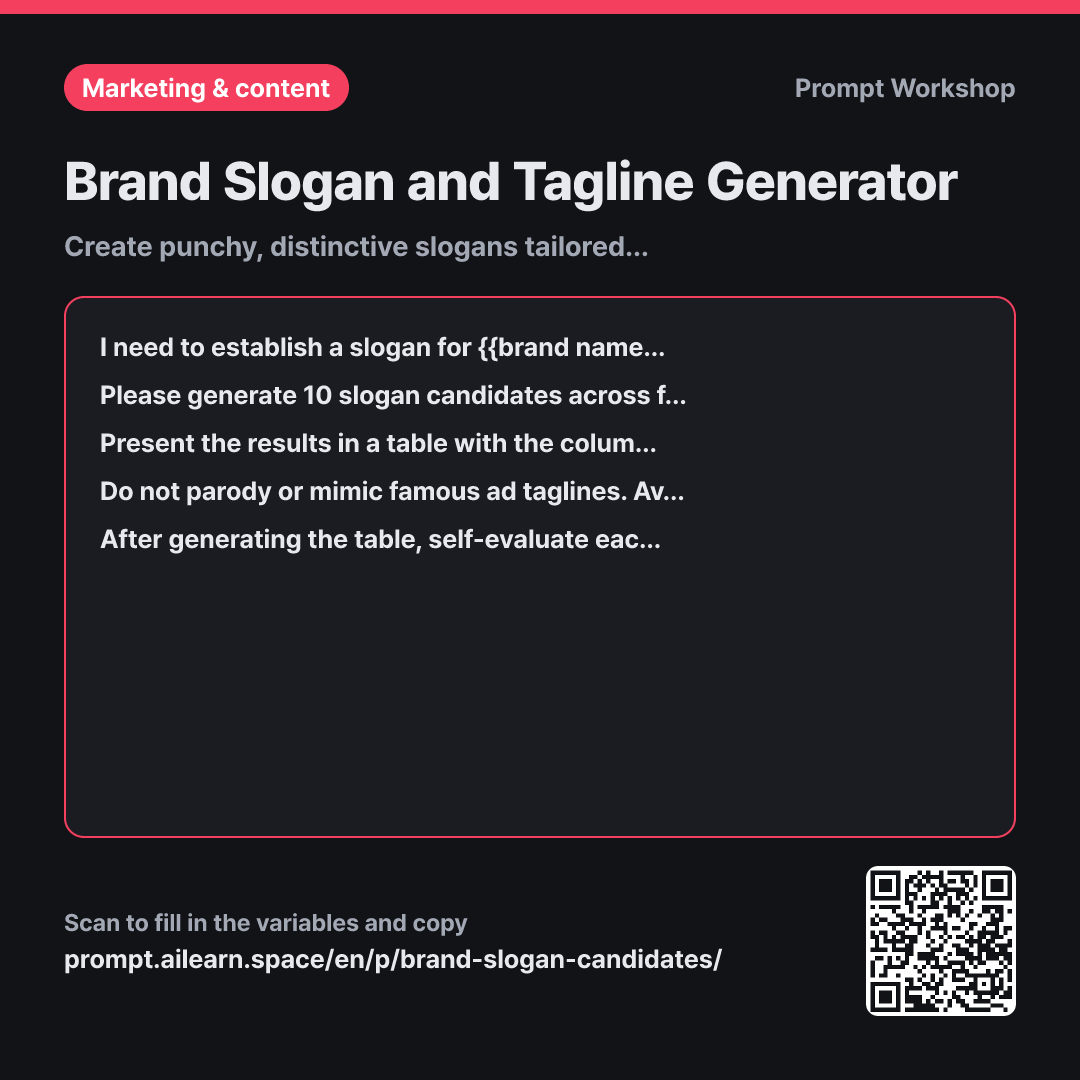
When you ask an AI to generate a "catchy slogan," it usually outputs vague lines like "Elevate your everyday" or "Crafted with passion." These fit a side-dish shop, a furniture brand, or an insurance policy equally well. This prompt forces the AI to filter candidates based on brand exclusivity.
The Task splits the generation into four distinct angles. Instead of returning 10 emotionally generic phrases, introducing angles like "what we do not do" or "customer language" draws out unique, unconventional ideas.
The "Why this fits ONLY this brand" column in the Format prevents superficial outputs. When the AI has to justify exclusivity, generic options are exposed and eliminated. The word limit ensures punchy, breathable phrasing.
The Constraints explicitly forbid copying famous ad structures or leaning on buzzwords. Slogans that mimic existing ads might sound familiar at first, but they fail to build a distinct brand identity.
The final self-evaluation step eliminates universal cliches. Once you get the top 3 recommendations, iterate by asking for "5 more following angle #2" rather than trying to generate 30 at once.
Unfamiliar terms? See Aha AI: prompt, temperature
Compared with a bad example
Recommend 10 catchy slogans for my meal prep shop.
You will get generic phrases like "Taste of Home" or "Healthy meals made with care." Crucial differentiators, such as single-serving portions or zero food waste, will be lost completely.
Variations
Selecting a Winner from Shortlisted Candidates
I have narrowed down the slogan candidates for {{brand name}} to 3 options. For context, our brand is defined as: {{one line introduction}}.
Do not generate new slogans; simply compare the current candidates. Evaluate each option against three criteria: ① Is it natural and easy to say aloud? ② Will it still stay relevant 5 years from now? ③ Could a direct competitor use it just as easily? Finally, select the best one and explain why the others were eliminated.
Separating generation from selection produces better results. If asked to choose in the same prompt, the model tends to default to its very first option.
Short Taglines for Storefronts or Business Cards
Please create 8 short taglines to place alongside the logo on {{brand name}}'s storefront and business cards. Brand context: {{one line introduction}}.
Keep each within 4 to 5 words so that someone walking past the store instantly understands what we sell. Prioritize clarity over fancy wordplay.
Storefront signage requires shorter, more direct phrasing than broader brand slogans. The constraints and criteria are adjusted accordingly.
Model notes
Requesting more than 10 at once causes word repetition in later candidates. Pick a preferred direction first, then prompt for more within that specific angle.
When requesting more than 10 slogans at once, the model tends to recycle words in later candidates. Request 10 at a time, pick the angle you like best, and ask for more in that specific direction. Word count constraints may occasionally vary by one or two words, so manually verify the final shortlist.
Related prompts
Last updated 2026-09-02 · Found a mistake? Let us know