Why it is written this way
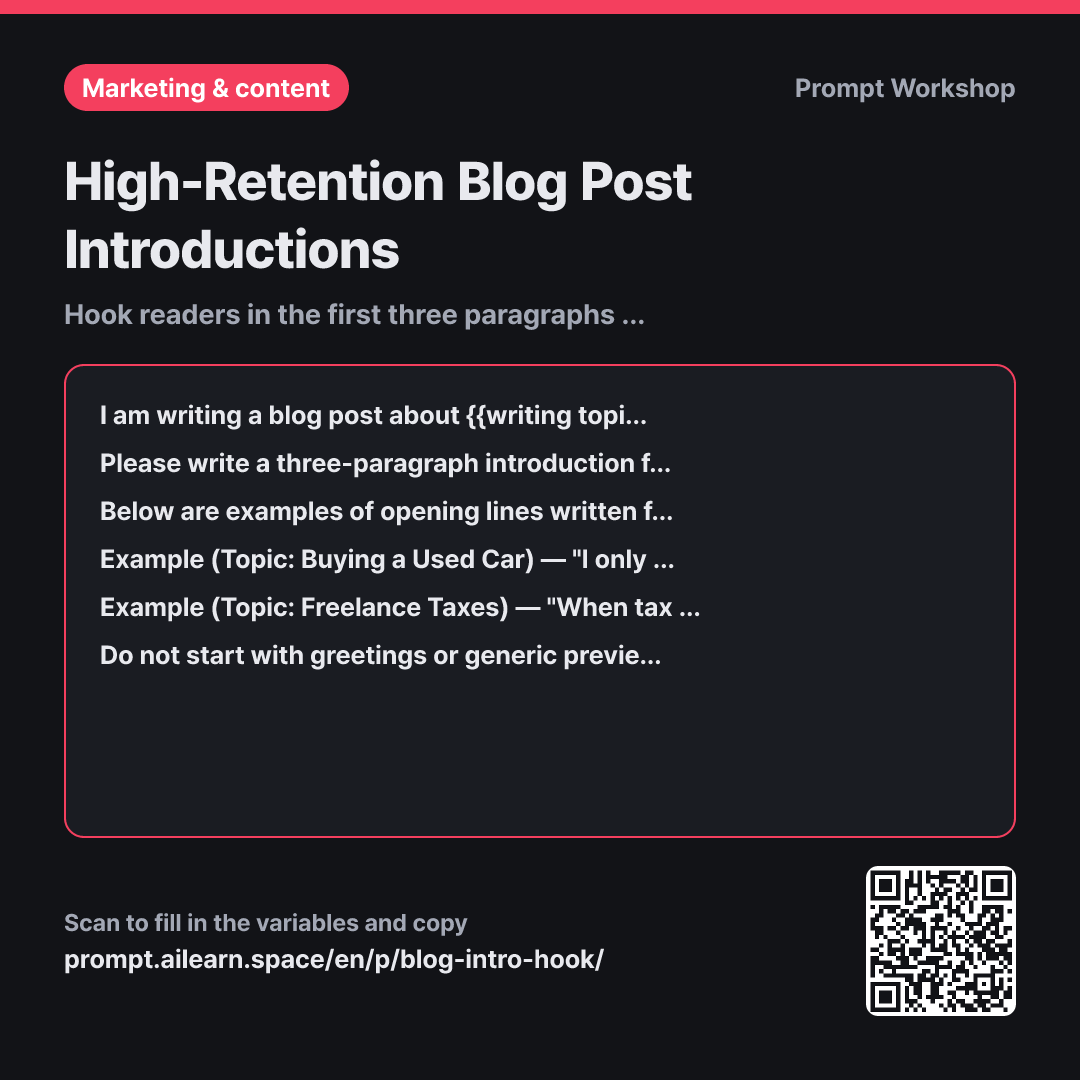
When you ask ChatGPT to write a blog intro, nine times out of ten it starts with something like, "Hello! In this post, we'll explore lease agreements." This opening wastes valuable above-the-fold screen space without delivering any useful value. Search-driven readers visit to see if their specific problem is addressed here; greeting fillers and vague previews only cause them to hit the back button.
This is why the context in the first paragraph explicitly defines the audience. A "first-time renter in their 20s" and a "family preparing for their second move" worry about entirely different pain points. Specifying the reader ensures the AI speaks directly to a real person rather than churning out generic fluff.
The task paragraph structures the introduction into a strict three-part framework: Situation description → Flawed attempt → What they will gain. This order matters because the second beat proves whether the post offers anything genuinely new. When you highlight why common advice fails, you give readers a compelling reason to keep scrolling. Limiting the third beat to a single sentence is also an intentional constraint, preventing the promise from sprawling into the main body.
The examples in the third paragraph communicate the desired tone and rhythm rather than just word counts. Merely instructing the AI to "write specifically" rarely works, but providing concrete opening hooks guides it to start right in the middle of a scene. Using completely unrelated topics in the examples prevents direct copy-pasting. Finally, the constraints paragraph explicitly forbids the cliched filler phrases AI habitually falls back on.
Compared with a bad example
Write a blog post introduction about how to check a lease agreement.
Without a target audience or negative constraints, the AI defaults to the safest, most generic template. It opens with a polite greeting, spends two paragraphs stating obvious truisms about why lease agreements matter, and ends with "Now, let's dive in!" Readers learn nothing new and immediately bounce.
Variations
For personal stories and case studies
Write a three-paragraph introduction for a personal story blog post about {{writing topic}}. The audience is {{target reader}}. Instead of leading with raw information, start right in the middle of a scene I experienced. The first paragraph should describe a specific snapshot of that day, the second should highlight what I misunderstood back then, and the third should transition into what I will share in this post. Leave any specific factual details I haven't provided as [Insert your personal experience here].
Fabricated details in personal narratives are immediately obvious. Leaving explicit placeholders makes it easy to fill in genuine experiences later.
For revising an existing draft
I will paste my draft introduction below. The post is about {{writing topic}} and the audience is {{target reader}}. Before rewriting, please diagnose the draft by identifying: 1) Sentences where readers are most likely to bounce, 2) Sentences that can be removed without losing meaning, and 3) Points that give away main body content too early. Flag up to two instances for each, then provide a revised introduction that addresses only the single most critical flaw.
Asking the AI to rewrite immediately often replaces your unique voice with standard AI prose. Forcing a diagnostic first keeps the edits minimal and targeted.
Model notes
AI models frequently exceed strict word count limits. If the generated intro is too long, follow up with: "Count the current words and trim it down to under 80 words without changing the core meaning."
Related prompts
Last updated 2026-09-02 · Found a mistake? Let us know