Why it is written this way
If you skip planning the blog outline and jump straight into drafting, you often end up repeating the same points three times. Each paragraph might look good in isolation, but by the end, readers feel like they just read repetitive fluff that failed to answer their original search intent. An outline isn't just about making things look neat; it's about partitioning the topics in advance so subheadings never overlap.
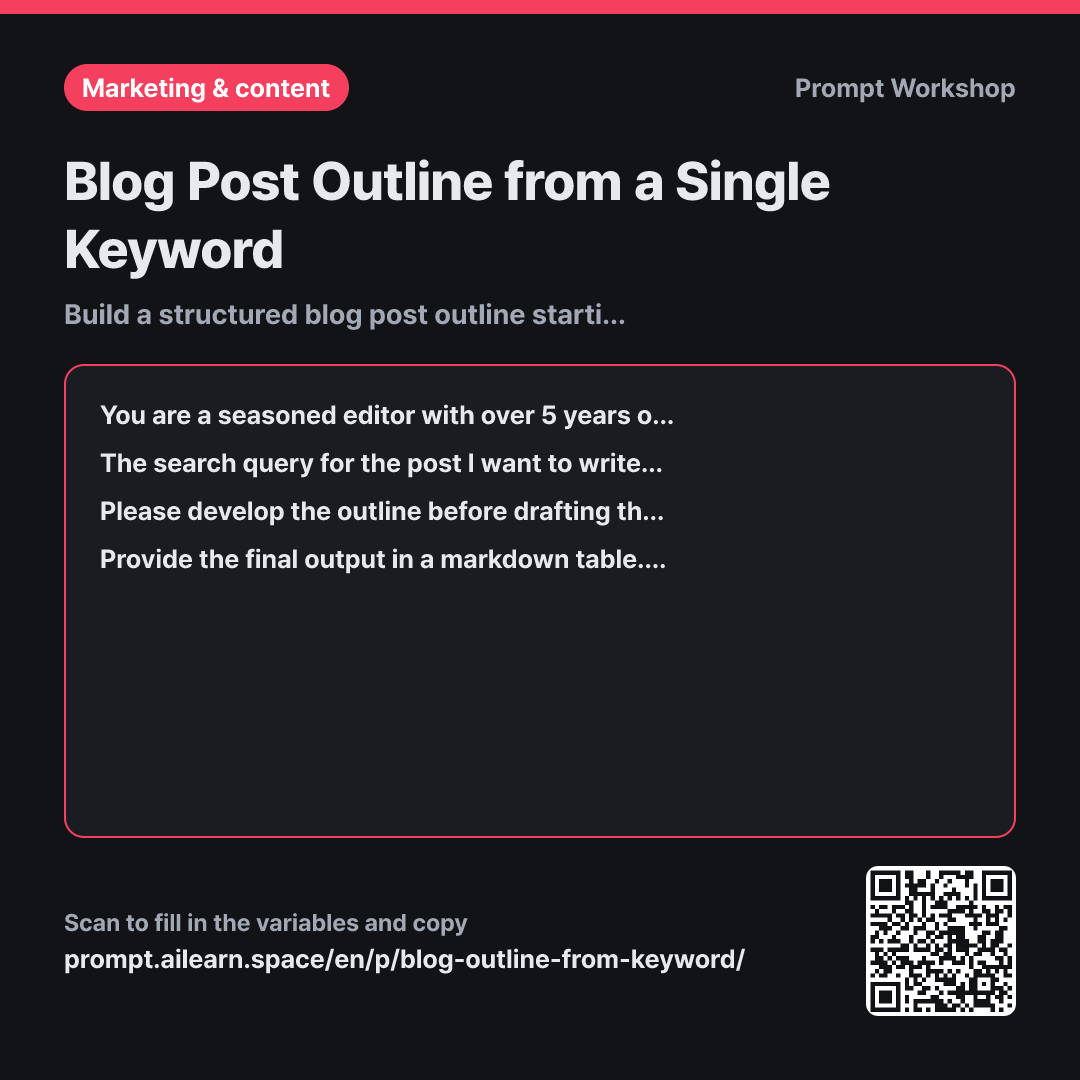
This is why the Role in the opening paragraph is an editor rather than a writer. A writer jumps straight into drafting, while an editor evaluates structure. The line stating you can "spot overlapping subheadings" directly reduces duplicate section topics.
The Context paragraph detailing the reader persona and target length determines the appropriate number of sections. For the same search term, a complete beginner needs a detailed explanation of causes, while someone who has already tried fixing the problem needs troubleshooting steps. Specifying the target length prevents the outline from bloating into a dozen unmanageable sections. Writing eight subheadings for a 1,500-word post leaves only two or three paragraphs per section, making the post read like a shallow checklist.
The Task paragraph stops the AI from generating subheadings immediately. By forcing it to list real user questions, consolidate duplicates, and then structure headings around those answers, the subheadings become solutions rather than variations of the target keyword. Finally, the Format constraints ("3 Key Bullet Points" and estimated word count) turn this table directly into an actionable writing brief, while the "2 often-missed topics" prompt the AI to self-identify and plug any remaining content gaps.
Unfamiliar terms? See Aha AI: role-prompting, output-format
Compared with a bad example
Make a blog post outline about apartment window condensation mold.
Without a target reader or target word count, the AI defaults to an encyclopedia-style table of contents: Definition of Condensation, Causes of Condensation, Types of Condensation, Prevention Methods, Removal Techniques, and Conclusion. There are many bullet points, but none of them answer what a renter needs to do tonight. The subheadings overlap heavily, meaning you will end up merging sections once you actually start writing.
Variations
Reviewing an Existing Outline
You are a seasoned editor with over 5 years of experience managing search-driven blogs. Below is an outline for a post targeting the keyword "{{target search keyword}}", written for {{target reader}}. Please do not rewrite it from scratch; diagnose it first: 1) Sections with overlapping content, 2) Sections that fail to answer the searcher's core questions, and 3) Missing topics. Identify up to 2 items per category, and then provide an alternative version that only reorders the sections.
Asking the AI to regenerate the outline from scratch overrides your voice. Limiting the scope to diagnosis and reordering keeps your original intent intact.
Splitting into a Multi-Part Series
I want to turn "{{target search keyword}}" into a 3-part blog series instead of a single post. The target audience is {{target reader}}, and each post should be {{text length}}. Divide the core questions across the posts without topic overlap, and summarize the series in a table: Post Title, 2–3 Questions Answered, and Hook/Reason to Read the Next Post.
A structured way to break down an extensive topic across multiple posts. The "Hook/Reason to Read the Next Post" ensures continuity across the series.
Model notes
The sum of estimated word counts often drifts from the actual written draft. Once you finalize your outline, draft just one section first, then ask the AI to re-estimate the remaining sections based on the actual length of that completed section to keep your content plan aligned.
Related prompts
Last updated 2026-09-02 · Found a mistake? Let us know