Why it is written this way
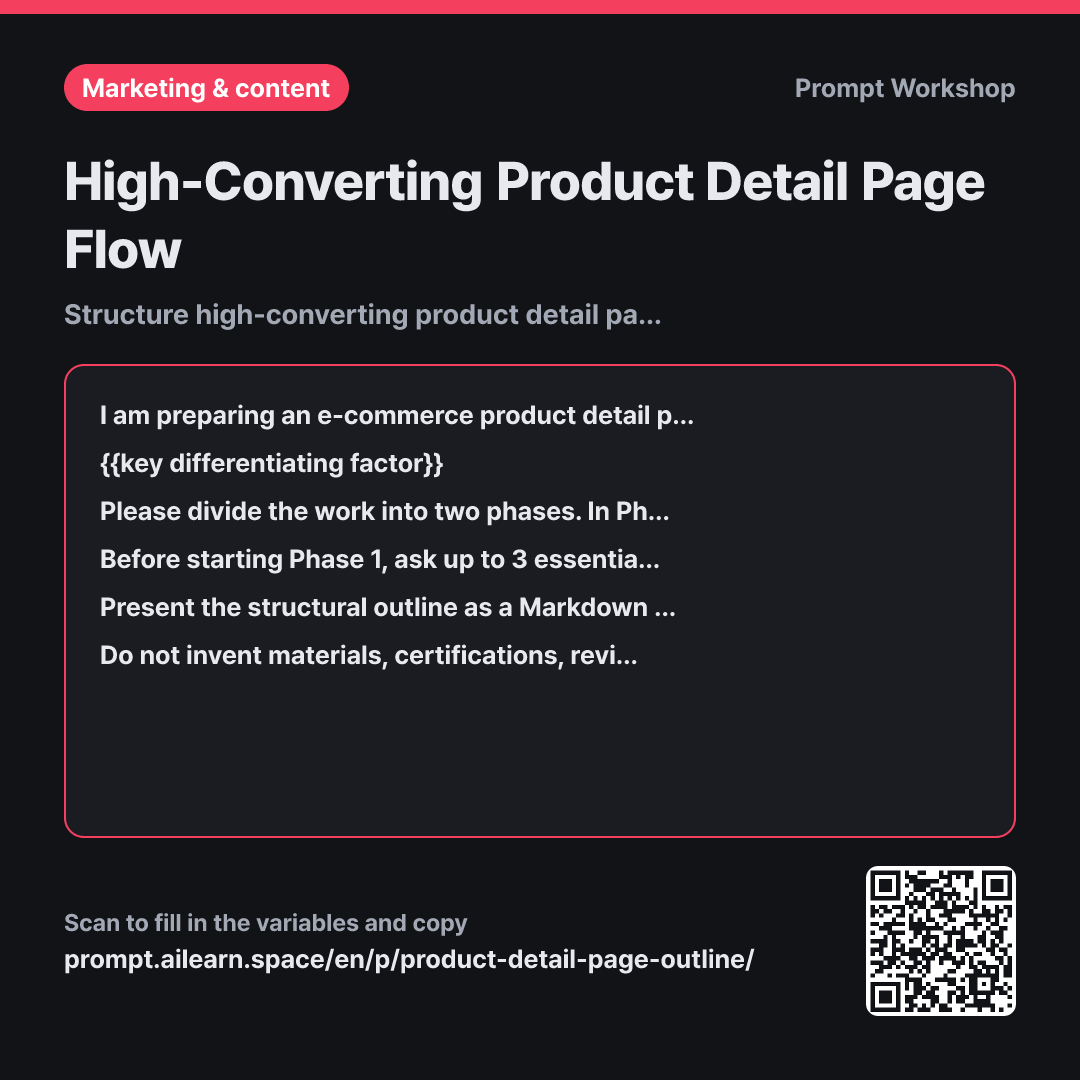
A common mistake when creating product detail pages is dumping all product specs at once and asking the AI to "organize it nicely." This results in a generic list where materials, dimensions, colors, and shipping info are jumbled together without sales psychology. What truly matters in a sales page outline is not the wording, but the sequence. What you show in the hero section determines half of your conversion rate.
The Context in the first paragraph includes the buyer persona, price range, and the critical premise that "most visitors bounce before scrolling to the bottom." This single instruction keeps the AI from burying critical selling points down below. Persuading someone to buy a $30 item requires a different sequence and evidentiary depth than selling a $300 item, making the price range essential for structuring the narrative.
The second paragraph splits the task into two clear stages. If you ask for layout and copywriting at the same time, the AI rushes the section hierarchy and wastes its tokens polishing weak copy. Finalizing the structure first ensures you never throw away drafted copy just because the section sequence was flawed.
The third paragraph triggers proactive clarification. Crucial e-commerce details like shipping lead times or return policies are often omitted because we take them for granted; letting the AI ask first uncovers these blind spots. Capping it at 3 questions prevents endless back-and-forth. The Format requirements—specifically the "Strategic Reason for Placement" column—give you logical leverage to review and debate the flow, while the "Required Assets/Visuals" column instantly turns into your photoshoot and design checklist.
Unfamiliar terms? See Aha AI: chain-of-thought, output-format
Compared with a bad example
Write a detail page for a floor desk. It is solid wood, folds, and weighs 7 lbs.
This produces a generic template like "Product Intro - Features - Specifications - Shipping Policy." Without specifying the buyer persona, there is no explanation of why folding flat matters to someone living in a studio apartment, nor any strategic thought on the hero banner. Lacking an asset checklist, planning and visual production end up completely disconnected.
Variations
Drafting section copy after the outline is approved
Write the exact copy for Section #3 from our approved outline. Keep in mind that {{target audience persona}} is reading this, and structure the output into one bold headline, 2–3 sentences of explanatory body copy, and one image caption. Use only the provided differentiating factors, and mark any missing information explicitly as "[Information Needed Here]".
Key Differentiating Factors: {{key differentiating factor}}
Corresponds to Phase 2. Writing section by section makes it easy to control length and tone, and lets you regenerate only the sections you want to tweak.
Auditing an existing product detail page
We are currently running a product detail page for {{product item}}, but the bounce rate is high. Below is our current section flow. Based on what {{target audience persona}} cares most about at the {{price range}} tier, provide a table highlighting the 3 sections that must be reordered (with reasons) and any critical missing sections. Do not generate new ad copy; focus strictly on sequence optimization and missing components.
Current Section Sequence: {{key differentiating factor}}
Optimizes an existing live page instead of building one from scratch. Restricting the output to three key fixes enforces clear strategic prioritization.
Model notes
Some models may skip the clarification step and immediately generate the outline table. If that happens, simply reply: "Please ask me your clarifying questions first."
Some models may skip the clarification step and immediately generate the outline table. If that happens, simply reply: "Please ask me your clarifying questions first."
Related prompts
Last updated 2026-09-02 · Found a mistake? Let us know