Why it is written this way
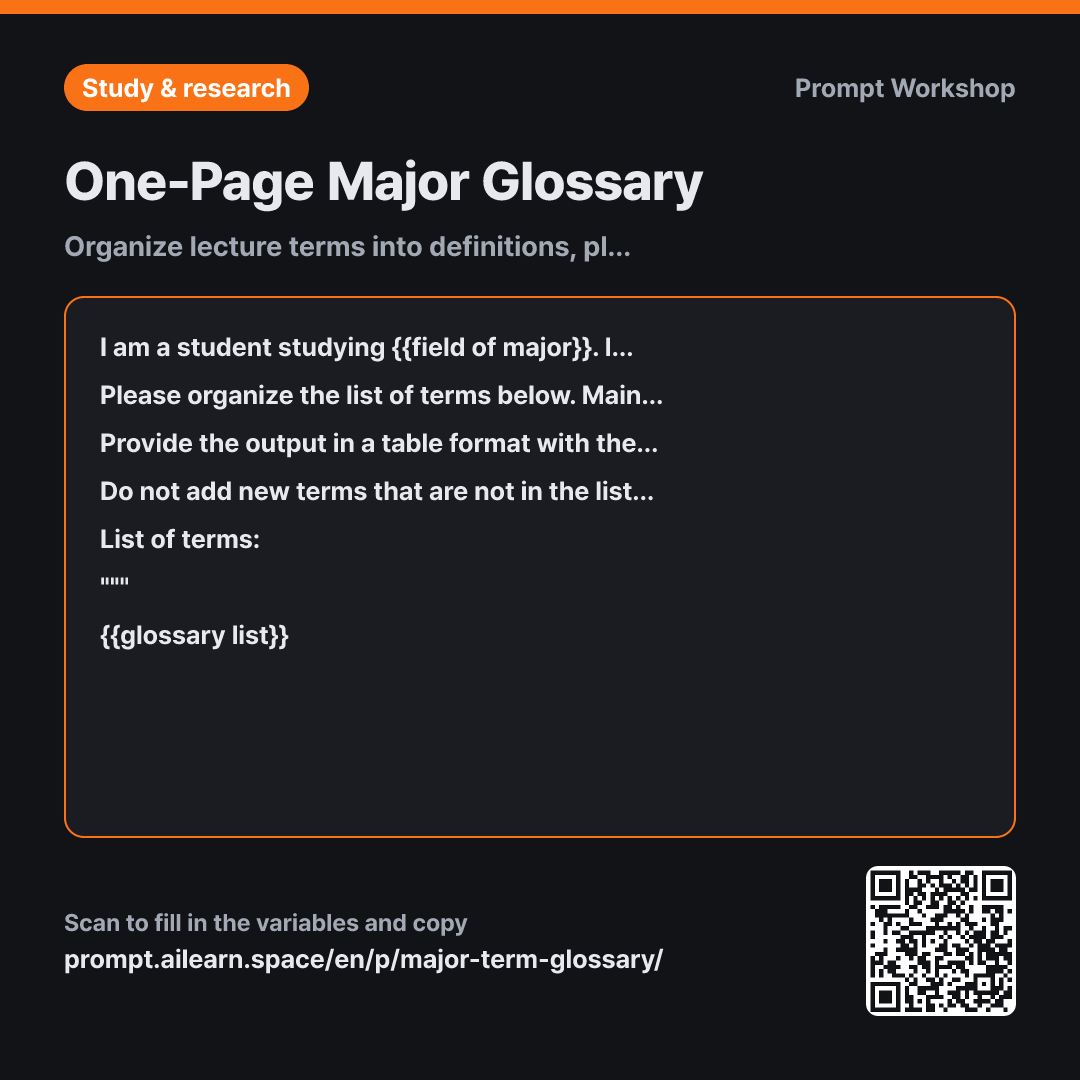
When you search for and compile course terminology term by term, the explanations end up having wildly inconsistent depths. One concept gets an encyclopedic breakdown while another gets a one-line casual metaphor from a blog. Putting them in the same study note makes it impossible to distinguish core fundamentals from minor details later on. This prompt feeds the whole list at once to measure every concept by the same yardstick.
The third paragraph (Format) forms the backbone of this prompt. Constraining the "One-line definition" to a brief length allows for quick scanning right before exams, while the "In plain English" column weeds out the illusion of competence—knowing the textbook definition without actually understanding how to explain it. The "Commonly confused pair" column is especially vital. Most exam mistakes happen not from total ignorance, but from mixing up two closely related terms. Pairing concepts like Mutex and Semaphore side-by-side lets you immediately contrast them.
The fourth paragraph (Constraints) prevents the glossary from bloating or hallucinating. Without telling the model not to add outside terms, it will eagerly append "related concepts," expanding your scope beyond the actual test syllabus. Authorizing a "Needs Verification" flag serves the same purpose; unless given a safe way to leave a blank, language models will invent plausible-sounding filler text.
Finally, wrapping the list in """ delimiters ensures that scratch notes mixed into lecture transcripts (e.g., "Review this later") are treated strictly as data rather than instructions. Such fragments often hitch a ride when copying directly from course notes.
Unfamiliar terms? See Aha AI: output-format, hallucination
Compared with a bad example
Tell me the definitions of these operating systems terms:
Process, thread, context switching, critical section, mutex, semaphore, deadlock...
The model will return full paragraphs for each term with inconsistent lengths and depths. As unstructured prose rather than a clean table, it is difficult to skim before an exam. Without identifying confused pairs, you might read about Mutex and Semaphore separately without grasping the crucial differences between them. Unsolicited "bonus concepts" may also slip in, broadening your study scope unnecessarily.
Variations
Self-Testing Right Before the Exam
Please create a self-assessment checklist based on the list of {{field of major}} terms below. Do not include full definitions; instead, provide "3 mandatory keywords required when explaining this term" for each entry. Use the following table columns: Term | 3 Mandatory Keywords | Commonly Confused Pair. Below the table, provide the correct detailed explanations in a separate section so I can check my answers.
List of terms: """ {{glossary list}} """
Reading the full answer first creates a false sense of mastery. This variant shifts the workflow to active recall: test yourself using only the essential keywords before checking the answers.
Processing Raw Lecture Notes
Below are my lecture notes from {{field of major}}. First, extract a list of candidate exam terms from the notes and pause for my confirmation. Once I finalize the list, organize them into a table: Term (with English original) | One-line definition | In plain English | Commonly confused pair.
Lecture notes: """ {{glossary list}} """
Use this when you lack the time to manually pick out key terms. Pausing for confirmation prevents casual examples or side remarks in your raw notes from accidentally being treated as core terms.
Related prompts
Last updated 2026-09-02 · Found a mistake? Let us know