Why it is written this way
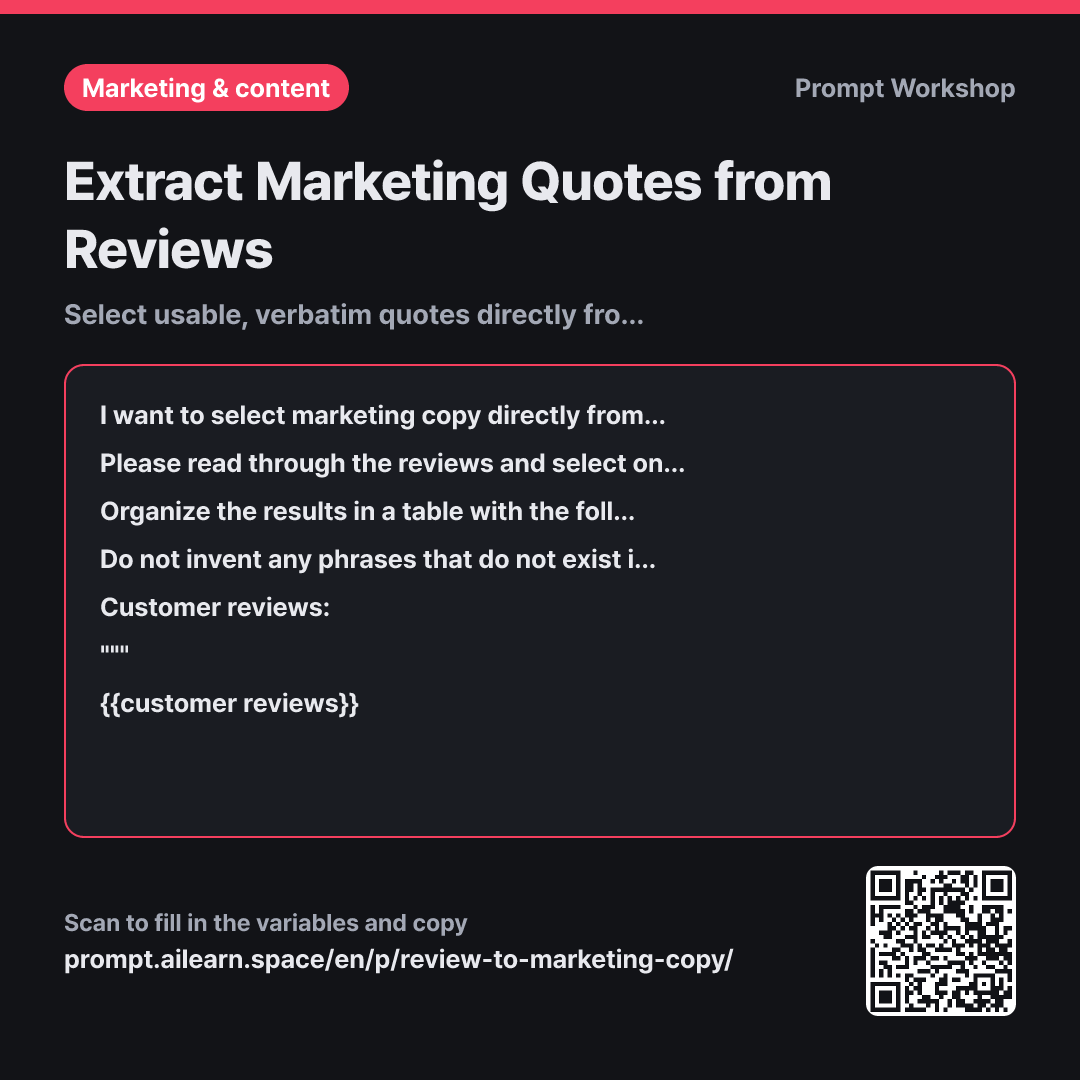
When trying to extract marketing copy from reviews by simply asking "Summarize these reviews into marketing copy," AI often mixes in praise that wasn't in the original text. The model blends impressions from multiple reviews to invent plausible-sounding phrases like "A product repurchased by countless customers." If you place that copy on a landing page, it becomes an unsubstantiated ad claim with no traceable source if questioned.
This is why the Task paragraph strictly specifies "do not summarize, copy word-for-word." You must establish a clear boundary between quoting and creative writing in your initial instruction. The table in the Format section pairs each quote with its "Key Benefit Highlighted," allowing you to pick just one representative sentence per benefit when multiple similar reviews exist.
In the Constraints section, problematic sentences are collected separately rather than discarded silently. If a review includes a claim like "I lost 10 lbs eating this," silently dropping it leaves you unaware of what was removed and why, whereas listing it with an explanation lets a human make the final judgment.
Wrapping the reviews in """ is not merely for aesthetics. Reviews sometimes contain meta-statements like "Please feature this part in your ads!", and if read as instructions, they can distort the output. This single delimiter keeps raw data distinct from instructions. The instruction to strip names and contact details serves the same purpose—preventing private customer info from accidentally ending up in live advertising copy.
Unfamiliar terms? See Aha AI: prompt-injection, hallucination
Compared with a bad example
Make some marketing copy from these reviews.
(paste reviews)
This produces brand-new copy that merely mimics the overall tone of the reviews. Phrases like "Ultimate customer satisfaction guaranteed" or "Our repurchase rate speaks for itself" never appeared in any actual review and lack evidence. It becomes impossible to tell which review inspired which phrase, leaving you with a mix of real quotes and fabricated text.
Variations
When Drafting Replies to Reviews
Please write an owner reply for each of the customer reviews below. Keep each reply to 2–3 sentences, referencing specific details mentioned in each review. Do not make unverified promises (e.g., offering future discounts), and for reviews with complaints, provide only a polite apology and the next steps for resolution.
""" {{customer reviews}} """
A variant for repurposing the same set of reviews into customer response drafts. The constraint against unverified promises is equally critical here.
Extracting Improvement Points from Low Ratings
Please extract only the sentences expressing dissatisfaction or disappointment from the reviews below. Do not create marketing copy; instead, organize them into a table: "Quote | Issue Category (Shipping / Quality / Customer Support / Price) | Frequency Count". Ensure single-occurrence complaints are distinguished from recurring ones.
""" {{customer reviews}} """
If you only extract positive quotes, you end up having to re-read the entire batch of reviews later to find pain points. This variant runs the analysis in the opposite direction.
Model notes
Please remove or mask names, usernames, and phone numbers before pasting reviews.
Please remove or mask names, usernames, and phone numbers before pasting reviews. If you have more than 20 reviews, earlier entries may get overlooked, so it is more accurate to process them in batches of 10 and combine the tables at the end.
Related prompts
Last updated 2026-09-02 · Found a mistake? Let us know