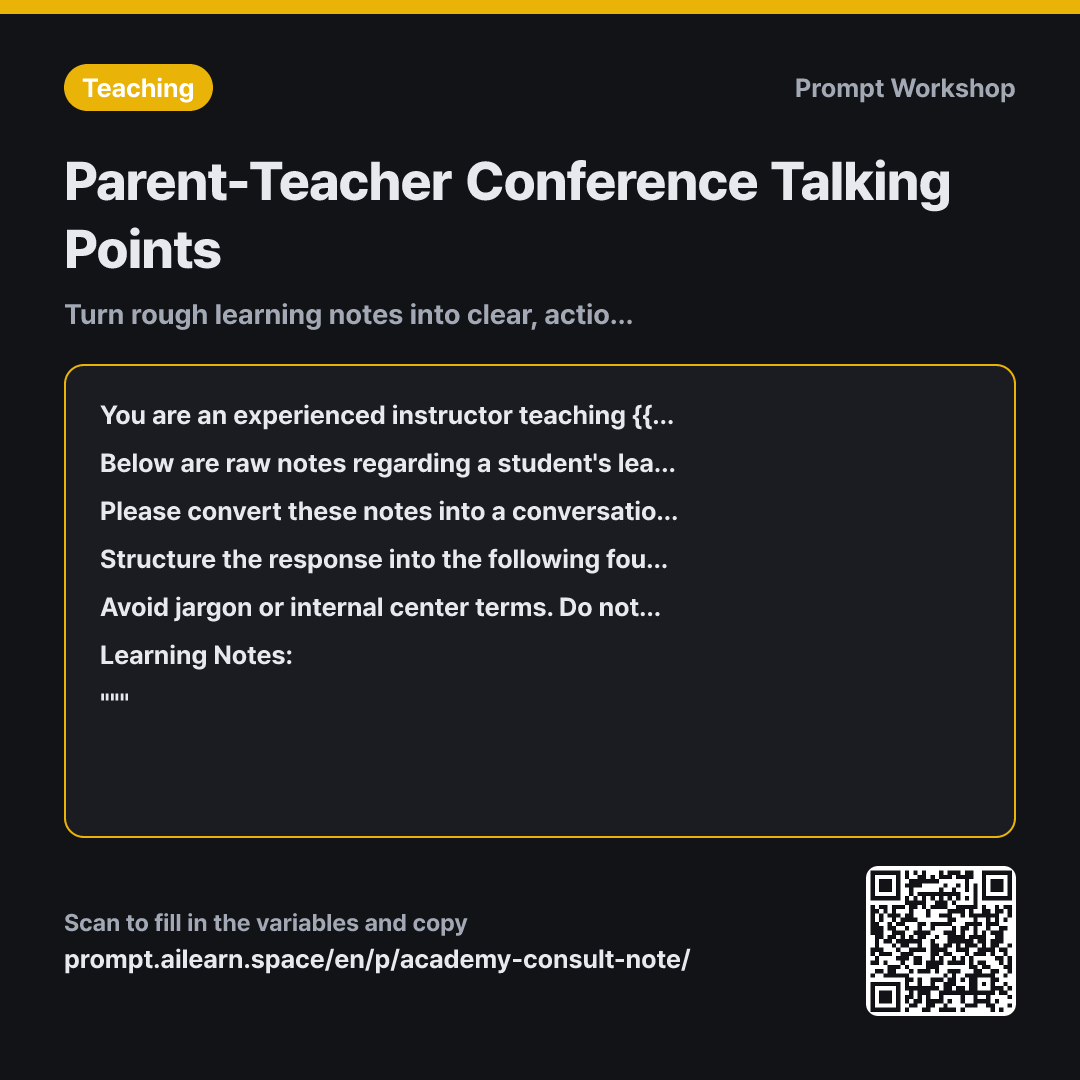
Why it is written this way
The most common mistake when preparing for parent-teacher conferences is turning the meeting into a basic grade report. Stopping at "the score dropped from 74% to 68%" leaves nothing meaningful to say, and parents leave without actionable guidance. This prompt solves that by bundling current status, root causes, and forward-looking plans into one cohesive narrative.
The Role paragraph defines an educator who understands the difference between reciting scores and offering actionable next steps. This single contrast sets the tone for the entire output. The constraints in the second paragraph (a 10-minute briefing and a non-expert parent) restrict both the length and the complexity of the language.
The third item in the Format paragraph is the core of this prompt. By requiring evidence cited directly from the notes, vague labels like "lacks focus" are replaced with concrete observations like "submits only half the homework and skips hard problems." Factual observations prevent defensive pushback and naturally lead into the action plan.
The Constraints section prevents risky communication pitfalls. Speculating on a student's character, making assumptions about home life, or making comparisons with peers can derail a conference. Once said, those remarks cannot be taken back.
Requiring the AI to stick strictly to the notes while grouping unknowns into "Questions to Ask" ensures accuracy. Enclosing the notes in """ prevents short fragments from being misread as prompt instructions.
Unfamiliar terms? See Aha AI: role-prompting, prompt-injection
Compared with a bad example
Write some talking points for a parent-teacher conference.
(Paste notes on grades and classroom attitude)
This prompt usually yields polite but empty filler. Generic phrases like "The student works hard but lacks conceptual clarity" could apply to anyone and fail to tell parents what to adjust at home. Without requiring specific evidence, the AI often hallucinates details, leaving you unprepared if the parent asks follow-up questions.
Variations
Post-Conference Follow-Up Text
Based on the {{academic subject}} learning notes below, write a follow-up text message to send to the parent after our conference.
Keep it under 150 words and structure it in this order: 2 lines summarizing today's key takeaway · 2 lines outlining our 8-week plan · 1 actionable item for home support. Avoid cliché greetings or apologies, and ensure the parent clearly knows what to do next. Keep the tone polite, encouraging, and professional.
Learning Notes: """ {{student learning status}} """
Use this to leave a written record after a meeting. The strict word limit ensures it fits into a single SMS or chat message.
Handling Challenging Questions on Grade Drops
Review the {{academic subject}} learning notes below and help me prepare for a parent asking defensively, "Why did my child's grades drop despite attending your classes?"
First, predict 5 challenging questions the parent might ask. For each question, provide a 3-sentence response based strictly on facts from the notes. Mark any question that cannot be answered from the notes as "Requires Follow-up." Do not sound defensive or blame the student; conclude every response with what we will do differently going forward.
Learning Notes: """ {{student learning status}} """
Use this when preparing for difficult or defensive conversations. Anticipating tough questions in advance prevents caught-off-guard moments.
Model notes
Remove the student's name, school, and contact details before pasting. Learning observations alone are sufficient for accurate results.
Related prompts
Last updated 2026-09-02 · Found a mistake? Let us know