Why it is written this way
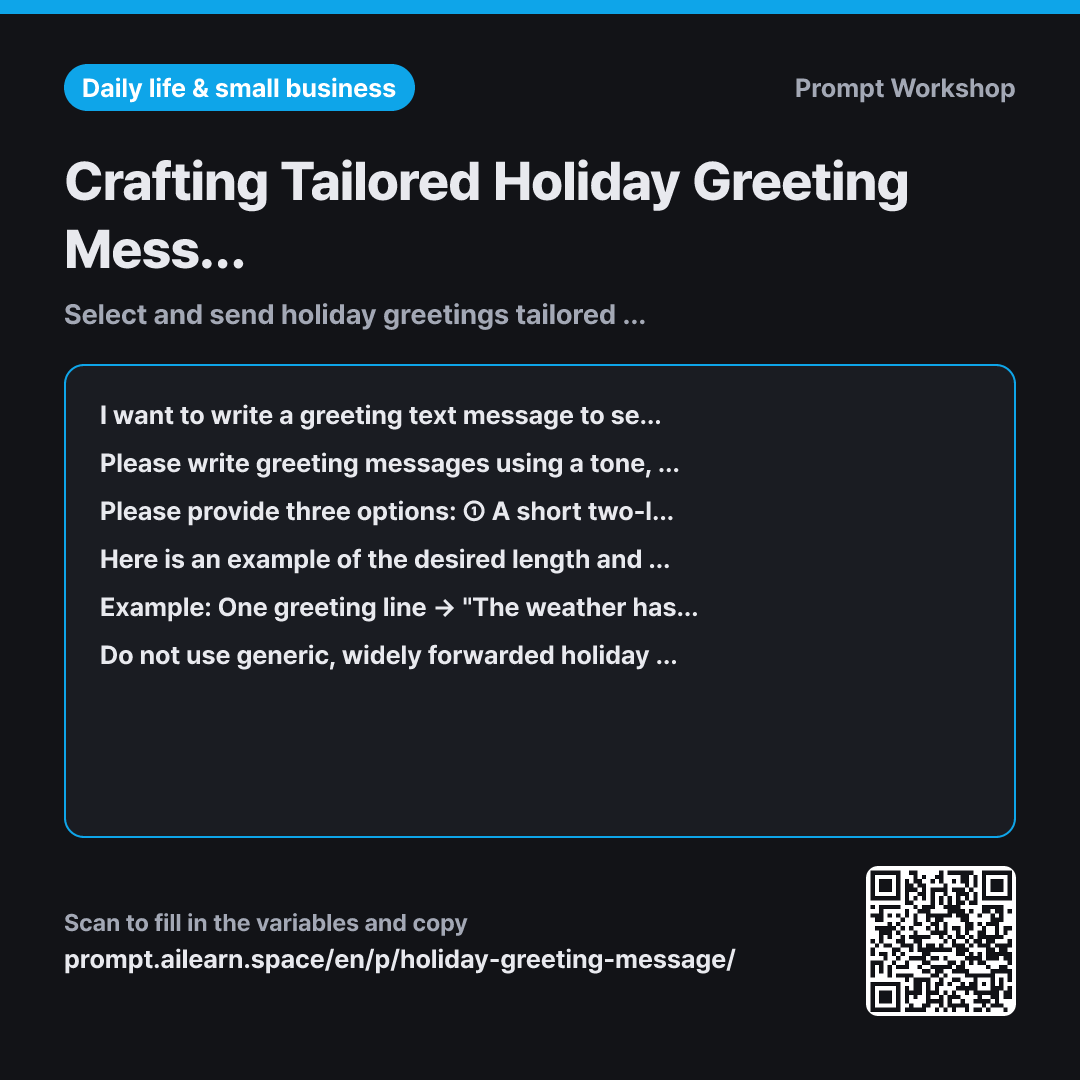
The telltale sign of an insincere holiday message is obvious: when it looks like a generic template copied and forwarded from somewhere else. Recipients can spot this immediately because they often read the exact same phrases multiple times that day. The purpose of this prompt is not to make the writing ornate, but to select the right level of formality and length tailored to your specific relationship.
This is why the Context in the first paragraph specifies your relationship with the recipient. A message sent to an elderly relative versus a business partner requires different levels of politeness as well as different lengths. For elders, asking warmly about their well-being comes first; for business clients, a concise and polite note is more courteous. Insisting that the message "must include both an inquiry about well-being and holiday wishes" in the Task paragraph prevents the AI from merely generating generic blessings while forgetting to ask how the recipient is doing.
Requesting three versions at once in the Format section is designed because choosing among options is faster than editing one. The short version works for quick group sends, the standard version for individual contacts, and the third for reconnecting after a long time. The Example in the fourth paragraph illustrates the intended flow at a glance rather than describing it abstractly, intentionally using different subject matter so the AI doesn't copy it.
The final constraints block emojis, clichés, and fabricated personal updates. Fabricating updates is particularly risky: claiming "It's been so long since I saw you" or "I will definitely visit you this time" becomes awkward if untrue, and even worse if the recipient remembers and follows up. Leaving placeholders like [Insert your details here] for gifts or visits ensures you supply the real details, preventing the AI from filling in plausible but false promises.
Unfamiliar terms? See Aha AI: few-shot, output-format
Compared with a bad example
Write me a Chuseok holiday greeting text.
Without knowing who the recipient is, the AI generates a generic message meant for everyone. It produces standard internet copy filled with emojis starting with phrases like "Have a bountiful Chuseok!" It ends up too informal for elders yet too stiff for friends, making it unusable as-is for either.
Variations
When Sending to Multiple Groups at Once
Please write {{Holiday}} greeting messages categorized by recipient type. Split them into three groups: Elders/Seniors, Professional/Business contacts, and Friends, providing one two-line message for each. Ensure the three messages do not start or end with the same phrasing, and exclude emojis and clichés. Organize the output in a table so I can easily copy and paste.
Use this when you need to send messages to many people and cannot write each one individually. Categorizing them ensures varied phrasing so they do not feel like mass-sent messages.
Replying to a Received Greeting
I received a {{Holiday}} greeting from my {{Recipient}} first. Please write a two-line reply message. Include one opening line thanking them for their message, and conclude with a warm inquiry about their well-being so it does not feel like simply repeating the same greeting back to them.
A reply should naturally be shorter than the initial greeting. Changing the closing sentence to an inquiry about their well-being prevents it from sounding like a mere echo.
Related prompts
Last updated 2026-09-02 · Found a mistake? Let us know