Why it is written this way
Most professional New Year emails fail for a simple reason: they are filled with generic pleasantries that could be sent to anyone. Recipients immediately spot mass emails and treat them like spam. This prompt avoids that trap by requiring exactly one specific shared memory instead of generic well-wishes.
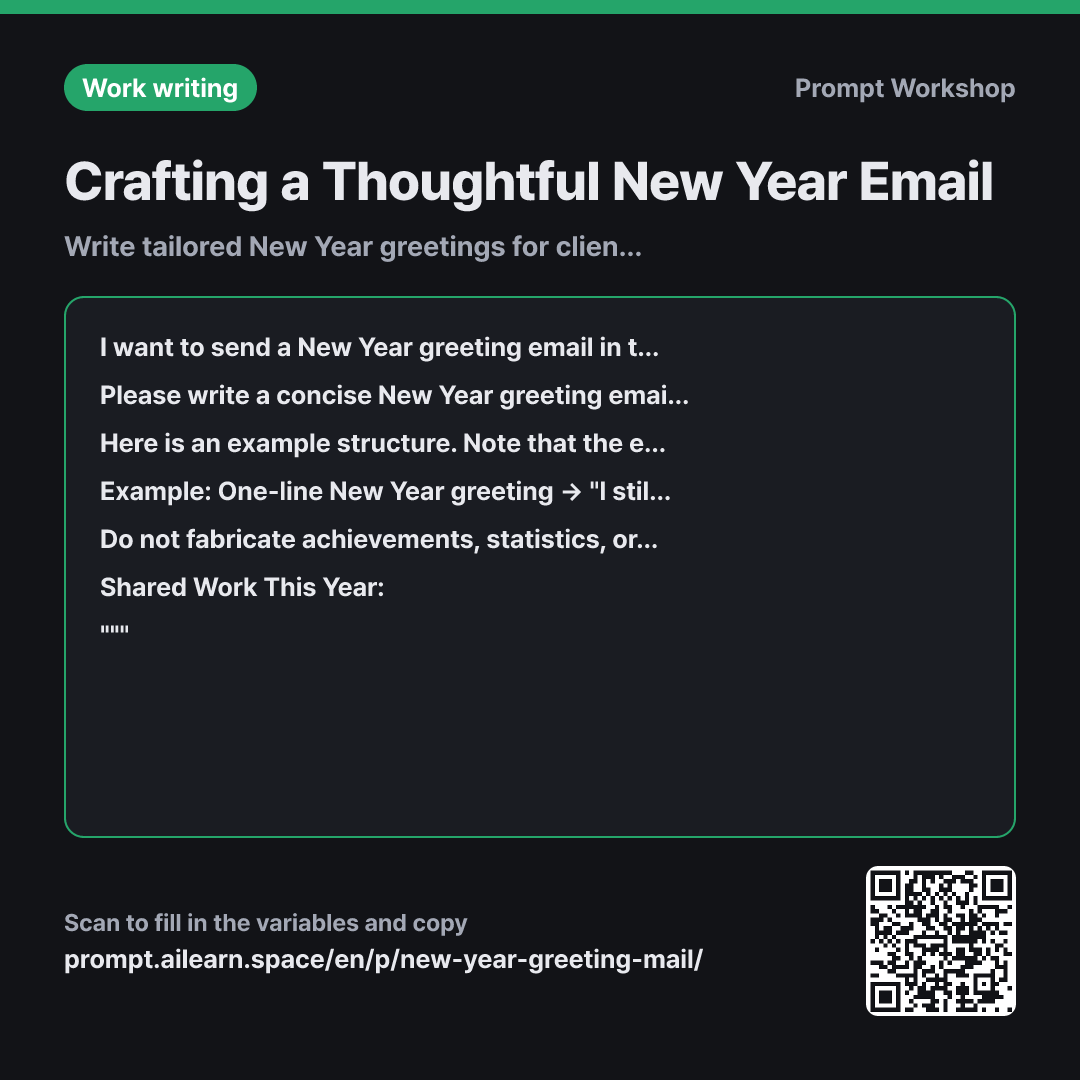
The first paragraph sets the Context, reminding the model of the recipient's inbox environment. Knowing the recipient is skimming through dozens of emails prompts the AI to write a human, authentic opening rather than stiff corporate fluff. The Task specifies "pick just ONE specific memory into a single sentence," preventing the email from turning into a bloated status report.
The third paragraph provides an Example. Showing a concrete structural blueprint is much more effective than abstract explanations. A different scenario is intentionally used in the example to prevent the model from copying specific phrases.
The Constraints block three major pitfalls: hallucinating unmentioned metrics, using tired corporate clichés, and slipping in work requests. Leaving out business asks is critical—adding a favor turns a warm greeting into a transactional invoice. Using a placeholder for unknown titles prevents awkward misattributions in the very first greeting of the year.
Unfamiliar terms? See Aha AI: few-shot, context-window
Compared with a bad example
Write a New Year greeting email to a business partner.
Without specific context about what you worked on together, the AI relies entirely on generic corporate clichés like "Wishing you continued success and prosperity in the coming year." It produces boilerplate text that looks like a stock template. The email ends up overly long, forcing you to manually insert personal touches anyway.
Variations
New Year Message to the Whole Team
Please write a New Year email addressed to {{recipient person}}. Because this goes out to the entire team, do not single out specific individuals or personal achievements. Instead, highlight one shared challenge the team overcame together last year in a single sentence, followed by a brief wish regarding our team collaboration this year. Keep it around 70 words, without clichés or emojis.
""" {{shared work this year}} """
Praising a single individual in a group email can alienate others. This variation shifts the subject to the team as a whole.
Reconnecting with an Inactive Contact
I haven't been in touch with {{recipient person}} for a while. Please write a warm New Year greeting to reconnect. Do not apologize or make excuses for not staying in touch. Simply reference one past collaboration from the notes below in a single sentence and add a brief, warm check-in. Keep it under 50 words, and do not ask to schedule a meeting or call.
""" {{shared work this year}} """
Starting a reconnection email with an apology burdens the recipient with having to reassure you. Both apologies and direct meeting requests are excluded.
Related prompts
Last updated 2026-09-02 · Found a mistake? Let us know