Why it is written this way
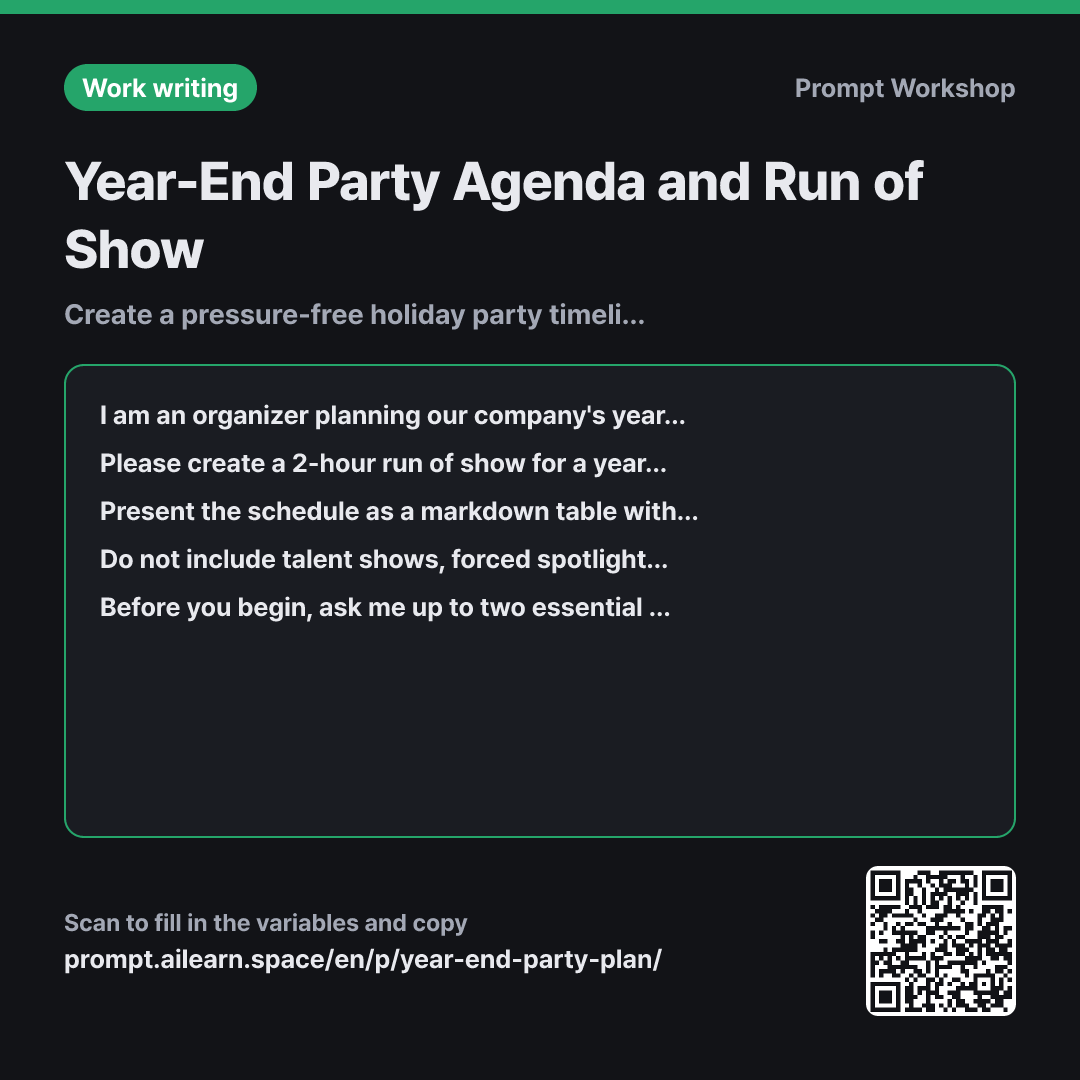
A year-end party's tone is often set within the first few minutes. The moment forced talent shows or mandatory toasts appear on the schedule, introverted or reluctant participants mentally check out. The purpose of this prompt is to eliminate forced participation before structuring the timeline.
Specifying "those who feel obligated to show up" in the initial Context is crucial. If given only a headcount and budget, AI defaults to high-energy corporate tropes; defining the audience's hesitations changes how the two hours are allocated. The Task sets the exact tone and duration to prevent the AI from generating an overly long three-hour schedule.
The table format in the Format section serves as a practical day-of cheat sheet. The "Host Action Items" column guides the facilitator on what to say and prepare at each stage, while the 3-line opening script covers the most nerve-wracking introductory moment. In the Constraints, coercive elements are banned by name and replaced with opt-in alternatives to avoid empty lulls.
The final paragraph enforces an Interactive Clarification step. Crucial variables—like whether seating is fixed or whether alcohol costs are factored in—heavily impact the plan. Capping questions at two and instructing the AI to wait ensures a focused consultation rather than an overwhelming list of queries or an unverified schedule dump.
Unfamiliar terms? See Aha AI: output-format, prompt
Compared with a bad example
Plan a year-end party schedule for 18 people. It should be 2 hours long.
With only headcount and time provided, the AI defaults to generic party tropes: team talent shows, round-robin toasts, and games with forfeits. Without budget constraints, it may suggest unnecessary prize purchases, resulting in a carbon copy of typical high-pressure gatherings.
Variations
Short Lunchtime Holiday Gathering
Please create a 90-minute lunch party agenda for {{number of people}} with a budget of {{budget amount}}. This will be an alcohol-free lunch event. Ensure at least 40 minutes are dedicated purely to dining, and fill the remaining time with simple, low-pressure activities. Provide the schedule in a table with three columns: "Time · Agenda Item · Host Action Items".
Before you begin, ask me just one essential clarifying question.
Designed for teams preferring lunch events over evening dinners. Explicitly reserving 40 minutes ensures activities do not interrupt the meal.
Standalone 15-Minute Year-in-Review Segment
Design a single 15-minute "Year-in-Review" activity suitable for a {{overall atmosphere}} vibe during a year-end gathering. Ensure all {{number of people}} have a chance to participate while limiting each person to a single sentence, and provide a graceful opt-out method for anyone who prefers not to speak. Also, include a 3-line script for the facilitator to introduce the activity.
Use this when you have an overall schedule ready and only need to design one specific, structured reflection segment without dragging out the time.
Related prompts
Last updated 2026-09-02 · Found a mistake? Let us know