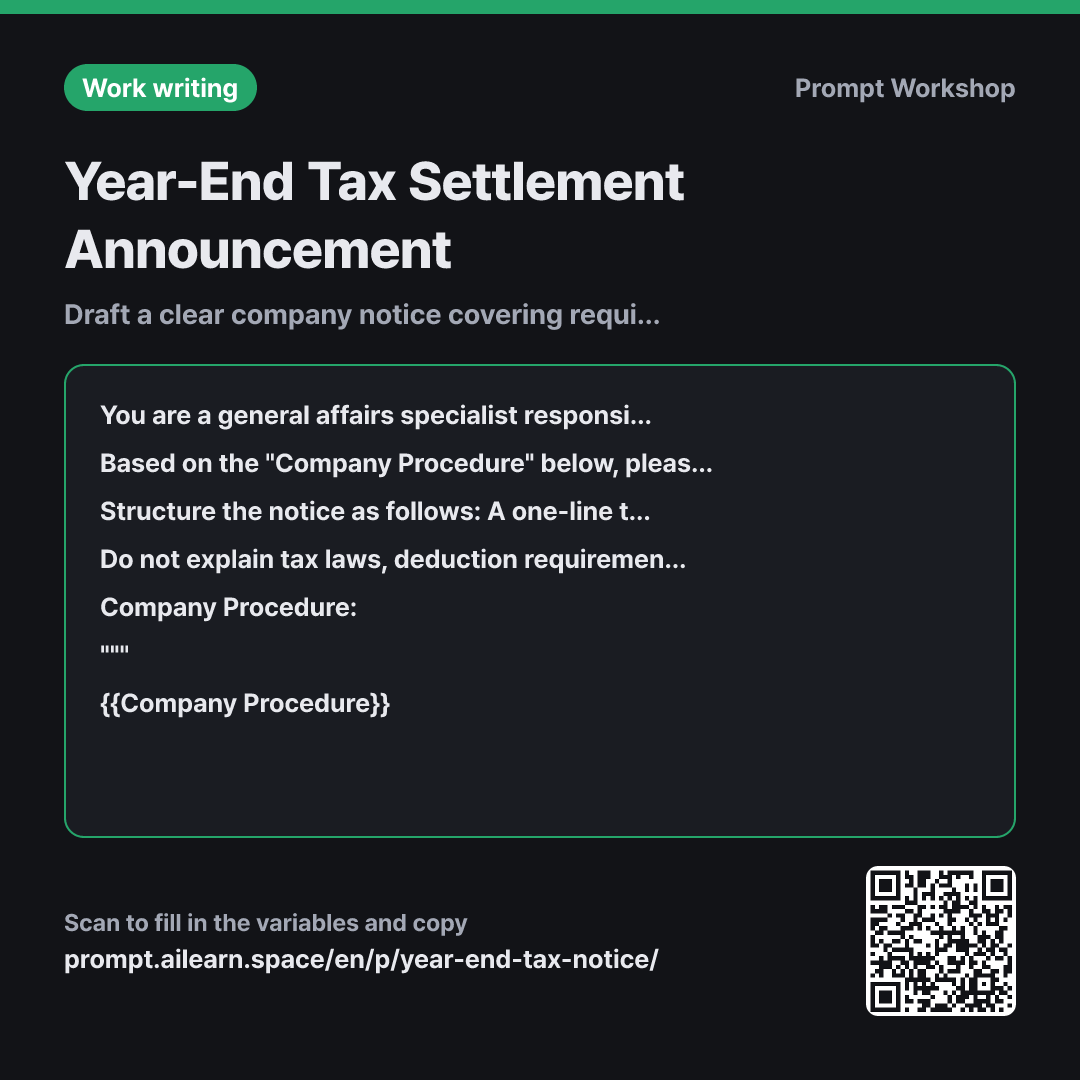
Why it is written this way
The biggest risk when asking AI to draft tax notices is letting it explain the tax code. Deduction rules and thresholds change every year, yet AI will confidently generate outdated explanations from past data. If employees prepare documents based on incorrect AI advice, the HR/payroll team takes the blame. This prompt strictly prevents the AI from explaining regulations, focusing entirely on internal company procedures.
The Context in the first paragraph establishes the reading environment. Knowing that employees will skim now and refer back later prompts the AI to use an easily scannable bulleted structure. The Task explicitly pins down the deadline and contact info—omitting these invariably leads to a flood of repeat questions.
The Format section defines the order of sections because tax notice templates vary widely across organizations, causing inconsistent formatting each year. Isolating "Special Cases (If Applicable)" prevents edge cases (like mid-year hires) from cluttering the main instructions for the majority.
The Constraints are three-layered: no tax code explanations, no hallucinated exceptions, and a predefined fallback line ("Please refer to the official tax authority guidelines") so the AI doesn't feel compelled to fill information gaps. Finally, enclosing user data in """ prevents raw notes from being misinterpreted as instructions.
Unfamiliar terms? See Aha AI: hallucination, output-format
Compared with a bad example
Write a year-end tax settlement announcement. The deadline is January 15th.
Without specific company procedures, the AI fills the gap with generic tax deductions. Half the notice ends up explaining broad tax categories, while crucial details like submission portals or no-paper policies are omitted. Employees will still have to email HR to ask how to actually submit.
Variations
Short Version for Team Messenger (Slack/Teams)
Condense the "Company Procedure" below into a concise internal messenger notice. Keep it under 8 lines, short sentences, and no emojis. Put the submission deadline {{Submission Deadline}} and contact {{Point of Contact}} on their own separate lines. Do not include tax law or deduction explanations.
""" {{Company Procedure}} """
Unlike formal bulletin boards, messenger updates must be readable without scrolling, so section headers are stripped and total lines are strictly capped.
Reminder Notice (3 Days Before Deadline)
There are only 3 days left until {{Submission Deadline}}. Write a reminder notice under 5 lines for employees who have not yet submitted their tax documents. To prevent those who already submitted from wasting time re-checking, make the very first line: "If you have already submitted your documents, please disregard this notice." Extract only the essential remaining action steps from the notes below. For inquiries, direct them to {{Point of Contact}}.
""" {{Company Procedure}} """
Reminders should prompt action from non-submitters without alarming those who already filed, which is why a disregard disclaimer is placed on line one.
Model notes
If the model starts explaining tax codes or deduction requirements, reinforce with: "Exclude tax law explanations and focus solely on our internal company procedure."
When asked about tax deduction criteria, different models give conflicting answers depending on their training cutoff. It is always safest to restrict the notice to procedural steps and link directly to official tax authority portals for tax rules.
Related prompts
Last updated 2026-09-02 · Found a mistake? Let us know