Why it is written this way
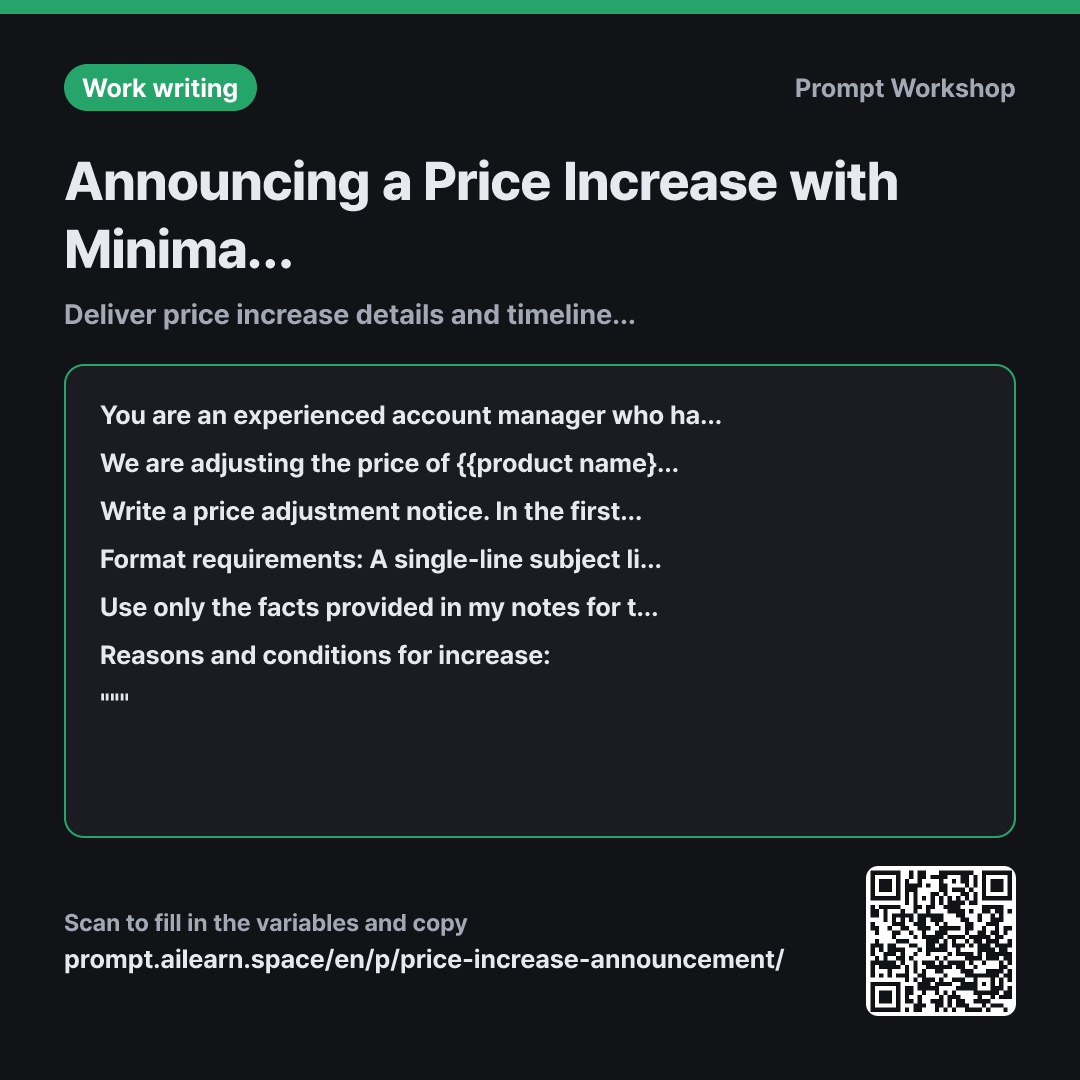
Standard price increase drafts generated by AI often read like formal letters of apology. Apologies are repeated in every paragraph, while the actual amount and effective date get buried in a passing sentence mid-text. Recipients feel information is being obscured and end up reacting more to the evasive tone than the price change itself. This prompt pushes the core numbers and dates directly to the opening paragraph.
The context in the second paragraph provides the rationale for this approach. Clarifying that the reader is an active user who values transparency over fluff stops the model from piling on unnecessary polite hedging. The task paragraph explicitly enforces this delivery order.
The constraints prevent two common pitfalls. First, hallucinating external justification. Citing broad economic trends or supply chain issues outside the provided notes sounds plausible but becomes indefensible if the client asks for clarification. Second, empty clichés. Words like "unavoidably" remove agency from the decision and sound dismissive.
The requirement for two options in the format section ensures the notice does not read like an inflexible ultimatum. Whether it is an early renewal window or a tiered plan, having concrete choices encourages clients to evaluate options rather than push back. Restricting these options to the provided text prevents unapproved promises from being sent. Finally, allowing iterative refinement keeps the door open to adjust the tone quickly to be more grounded and professional.
Unfamiliar terms? See Aha AI: hallucination, context-window
Compared with a bad example
Write a price increase notice. Prices are going up next month.
(paste internal notes here)
Without explicit instructions on structure and timing, the model fills paragraphs with apologies and pleasantries. It frequently invents external reasons such as "rising raw material costs" that were never mentioned in the notes. Customers receiving such emails are left without clear choices, leading to frustrated replies and follow-up inquiries just to find the actual price change.
Variations
Formal B2B Price Adjustment Notice
Write a formal B2B notice announcing a supply unit price adjustment for {{product name}}. Follow a standard business memo format (Recipient, Subject, Body, Enclosures). In the body, include {{rate of increase}}, {{point of application}}, and handling procedures for existing contracts. Maintain a professional and courteous tone without lengthy excuses, and conclude with a specific deadline for replies if contract discussion is needed.
""" {{reason for increase}} """
Formal B2B transactions require standard business memo structures for internal corporate approval. Setting a clear reply deadline keeps the channel for negotiation open and structured.
Pricing Tier Restructuring Announcement
Write a customer announcement explaining that the price of {{product name}} will increase by {{rate of increase}} starting from {{point of application}}, while introducing an alternative lower tier that maintains the existing price point. Include a comparison table highlighting the differences between the two tiers and provide a one-line recommendation on who each plan is suited for. Maintain a neutral tone without appearing to push the lower tier.
""" {{reason for increase}} """
Best suited when genuine alternative tiers exist. Leading with a comparison table reframes the communication from a simple price hike into a plan restructuring update.
Related prompts
Last updated 2026-09-02 · Found a mistake? Let us know