Why it is written this way
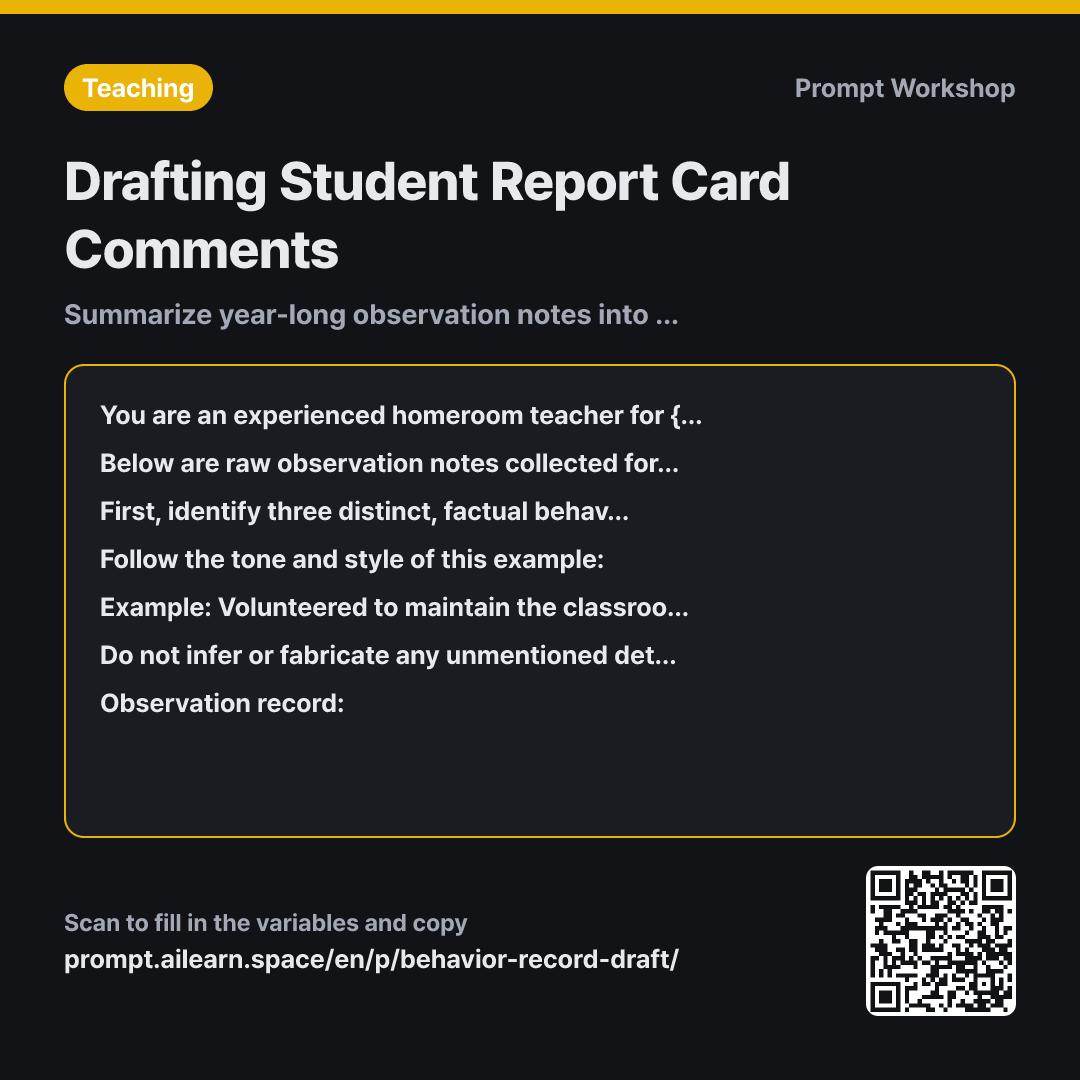
When using AI to draft student evaluations, it frequently returns generic paragraphs filled with superficial praise. Clichés like "bright, diligent, and gets along well with peers" can fit almost anyone and convey little useful information. This prompt directs the AI to select three specific, differentiating facts instead of fluffing up the text.
Setting the Role shifts the audience. Specifying "a record that helps next year's teacher clearly visualize the student" prompts the AI to focus on tangible scenes rather than empty compliments. Defining the target reader immediately alters the substance of the output.
The Example in the fourth paragraph establishes the target tone. Teacher evaluations require a distinctive style that avoids subjective adjectives in favor of concrete actions. Providing two or three sample sentences sets this precise tone. While more examples increase stylistic consistency, avoid using real student records.
The Constraints restricting personality labels form the core of this prompt. Calling a student "introverted" is an assumption, whereas stating "initially avoided public speaking" is a verifiable observation. Assumptions can be inaccurate and unfairly label a student long-term. Mapping sentences to their supporting notes catches hallucinations, while wrapping the input in """ prevents incidental notes from being treated as instructions.
Unfamiliar terms? See Aha AI: few-shot, prompt-injection
Compared with a bad example
Write a 300-character behavioral comment for a 6th grader.
(Paste observation notes)
While it meets the length requirement, half the response relies on unrecorded personality generalizations. Vague filler like "maintains harmonious peer relationships and works diligently" crowds out genuine, distinctive moments like library upkeep or the presentation.
Variations
Batch Drafting for a Full Class
Below are the observation records for a {{student grade level}} class, identified only by student numbers.
Write a draft of approximately {{character count}} characters for each student number. Afterward, compile any repetitive phrasing used across multiple students and provide varied alternatives for each. If a student's notes are insufficient for a solid draft, skip drafting and flag that number separately.
Observation record: """ {{observation record}} """
When drafting entries individually, repeated phrasing often goes unnoticed. Instructing the AI to detect and diversify repetitive expressions solves this issue.
Mid-Term Record Review
I am a {{student grade level}} homeroom teacher. Review the accumulated observation notes below to assess whether they provide enough substance for end-of-year evaluations.
Count how many distinct, factual behaviors set this student apart, and flag any entries written as subjective impressions rather than objective actions. Suggest two specific areas worth monitoring closely during the remaining term. Do not write a draft comment yet.
Observation record: """ {{observation record}} """
To avoid a rushed backlog at the end of the term, check for gaps mid-year. Explicitly forbidding a draft keeps the focus entirely on diagnostic review.
Model notes
Remove all student names before pasting. Because this produces a draft, the teacher must independently verify facts and check against official school reporting guidelines.
When drafting multiple student comments in a single conversation, phrasing from earlier students often bleeds into later entries. Start a fresh chat every ten students, or run a follow-up prompt asking the model to "flag all repeated expressions." AI drafts serve as raw material for teachers to verify and refine, not finalized submissions.
Related prompts
Last updated 2026-09-02 · Found a mistake? Let us know