Why it is written this way
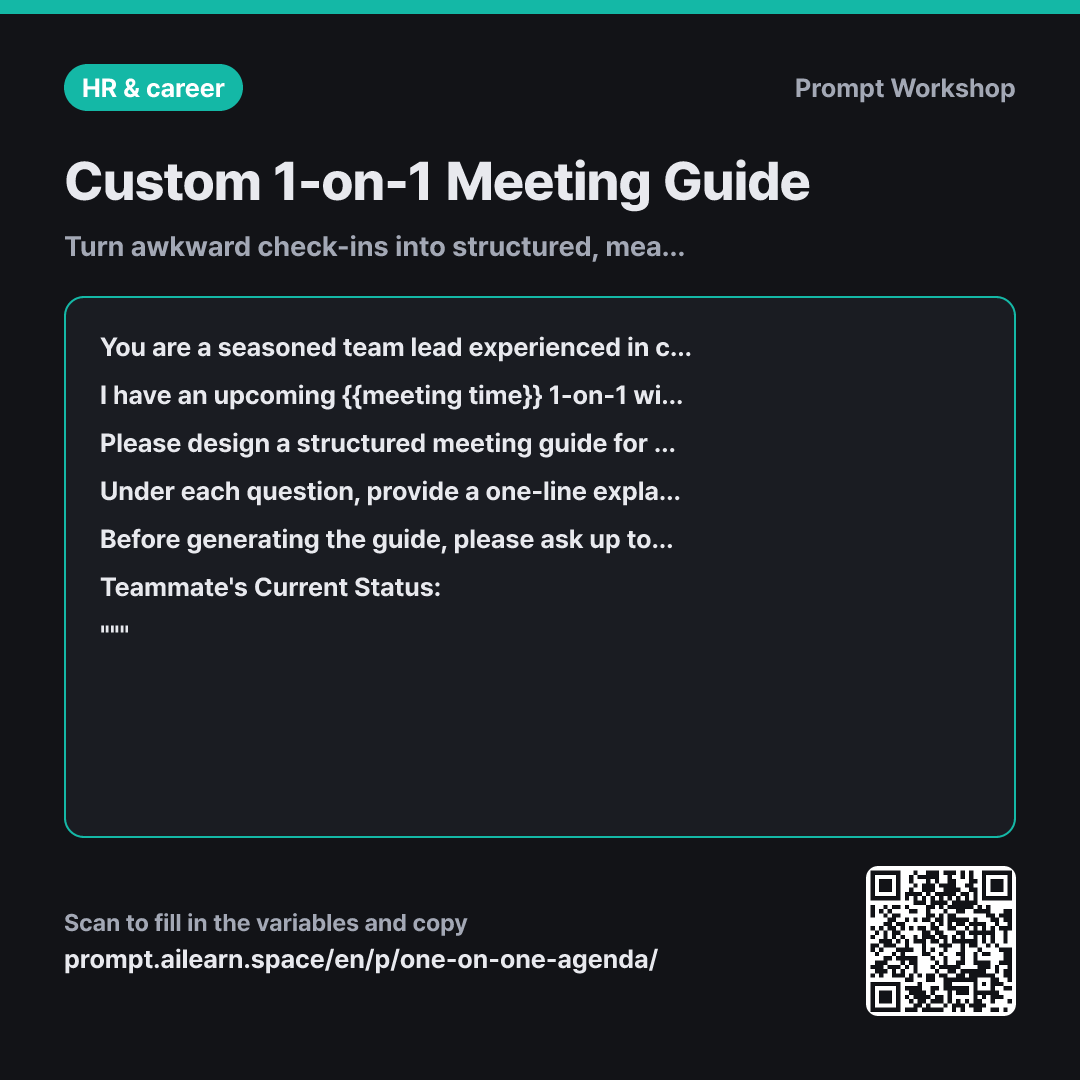
Using a generic 1-on-1 question checklist often turns a meeting into a robotic Q&A session. You either get stuck in superficial small talk about the weather, or you rattle off ten questions in a row, making the direct report feel like they are being interrogated. This prompt helps you receive a structured conversation flow designed around actual time constraints.
The Format constraints enforce this structure. Dividing the guide into Warm-Up, Core, and Wrap-Up with explicit minute allocations forces the model to keep the question count realistic. Time limits make it clear that ten questions cannot fit into a 30-minute session. Adding a "purpose of asking" for each prompt helps the manager quickly steer the conversation back on track if it wanders off-topic.
Establishing in the Context that this is not a performance review prevents the model from generating aggressive questions about KPIs and target metrics. Combining the meeting's specific purpose and duration ensures the agenda focuses on the most relevant issue at hand. Setting the Role as an empathetic, experienced team lead sets the right conversational tone.
The penultimate instruction acts as an interactive checkpoint, letting the model ask clarifying questions first. Notes about team members are often brief, and while models tend to fill gaps with assumptions, limiting questions to two ensures it only asks for critical missing details. Wrapping the input in """ prevents context notes from being parsed as instructions. Finally, requesting a list of "phrases to avoid" protects against common slips—most 1-on-1 mistakes come not from poor questions, but from careless remarks.
Unfamiliar terms? See Aha AI: context-window, persona
Compared with a bad example
Give me some 1-on-1 questions to ask my direct report.
This outputs a generic list of ten questions like "How is work going?" and "Are you facing any roadblocks?" Without context, none of the prompts address the specific situation, and without time allocations, the meeting ends after the first two questions. A broad question like "Any roadblocks?" almost always gets a reflex "Everything's fine," leaving critical topics like burnout or transfer requests completely untouched.
Variations
Post-Meeting Documentation
I just completed a {{meeting time}} 1-on-1. Please organize the raw notes below into a clean meeting record. Use the following structure: Topics Discussed · Teammate's Needs & Requests · My Action Items (with deadlines) · Follow-Up Items for Next Session. Clearly distinguish between what the teammate directly stated versus my own interpretations. Exclude sensitive personal details that are inappropriate for formal HR documentation.
""" {{teammate current status}} """
Documenting key takeaways within 5 minutes of wrapping up ensures you don't repeat the exact same discussion in the next 1-on-1.
Navigating Friction or Defensive Teammates
I have experienced recent friction with a team member in the situation below, and we need to address {{meeting purpose}} during an upcoming {{meeting time}} session. Build a conversation guide assuming the team member may start off defensive. Include two non-judgmental opening questions for the first 5 minutes and three de-escalation statements to maintain dialogue if the conversation becomes tense. Do not include any persuasive statements defending my own position.
""" {{teammate current status}} """
Including defensive or persuasive talking points turns a 1-on-1 into a unilateral lecture. This focuses strictly on empathetic listening.
Related prompts
Last updated 2026-09-02 · Found a mistake? Let us know