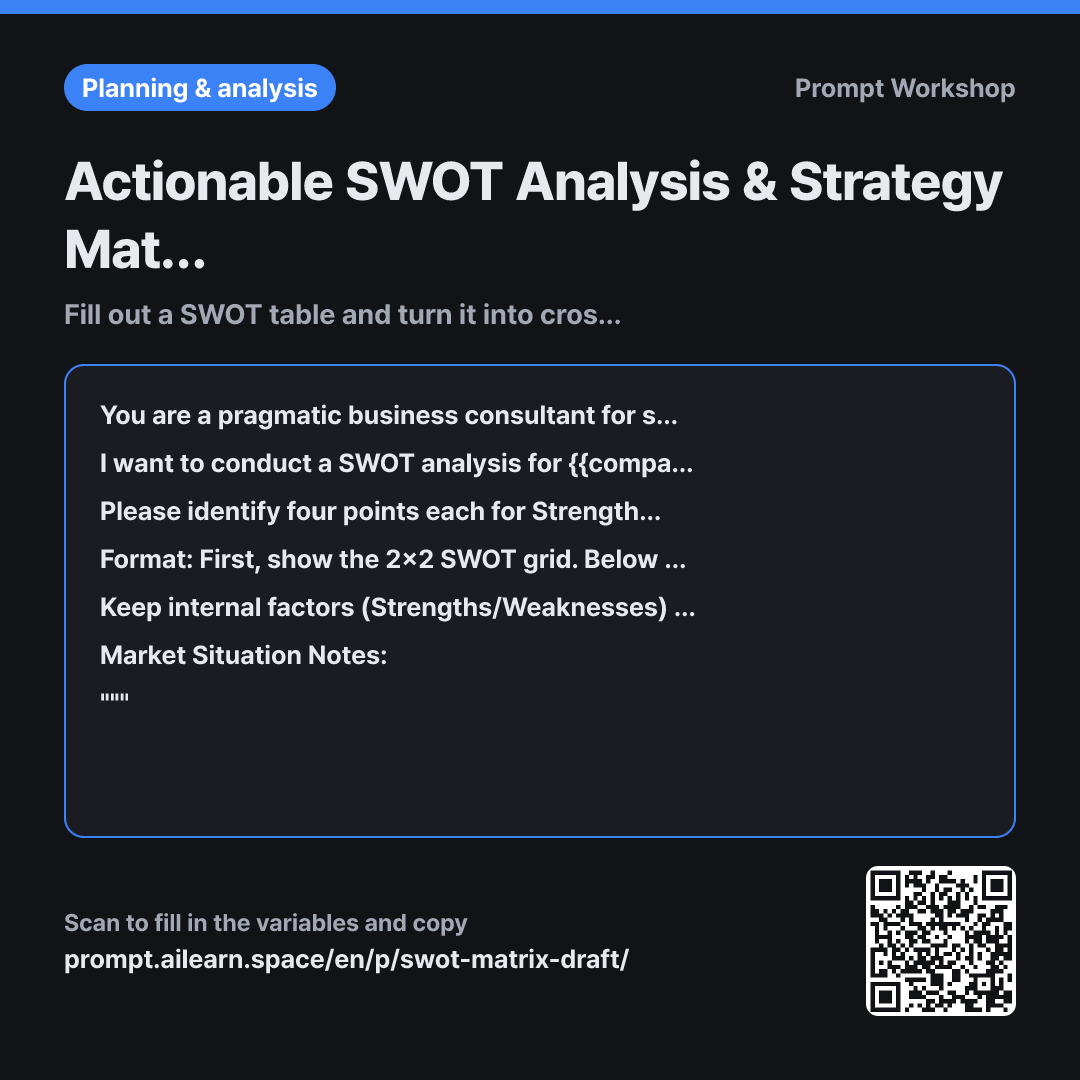
Why it is written this way
When you ask ChatGPT for a SWOT analysis, it fills the four boxes instantly. The problem is that taking that generic table to a meeting leads to zero concrete decisions. Statements like "Strength: friendly service, Weakness: low brand awareness" fit any business and fail to drive action.
The cross-matrix strategy in the third paragraph is the core of this prompt. Filling in the four boxes is just gathering raw ingredients; combining strengths and opportunities to define concrete moves is the true value of a SWOT analysis. Defining each combination ensures the AI does not gloss over the strategic matrix with a vague summary.
Setting the Role as a small business consultant rather than an enterprise strategist tailors the scope of the output. Recommendations requiring ten new hires are useless here. The Context in paragraph two—what the business sells and how it earns revenue—prevents internal and external factors from blurring together. The Format constraint requiring a "First Action This Quarter" column automatically filters out unexecutable strategies.
The final Constraints address classic SWOT mistakes: mixing internal and external factors, fabricating market figures, and using generic filler text. Since the goal is planning the next quarter rather than drawing a pretty chart, unverified data is appropriately flagged as "Needs Verification."
Unfamiliar terms? See Aha AI: role-prompting, output-format
Compared with a bad example
Do a SWOT analysis for a local Pilates studio.
You will get four generic bullet points per box that apply to any fitness studio. It ignores local competitors, new apartments, and hiring challenges. Without a cross-matrix strategy, you finish reading the table without knowing what to execute this month, turning meetings into repetitive discussions.
Variations
When you need a single decision instead of a full matrix
We need to choose one single focus area for {{company or brand}} this quarter. Review the notes below, evaluate the SWOT internally without showing the full table, and provide only: "One Key Focus · 3-Line Rationale · What We Choose to Give Up · How to Measure Success in 3 Months".
""" {{market situation}} """
Use this when you need an immediate strategic decision rather than a diagnostic table. Forcing the AI to specify what to give up makes the priority actionable.
Analyzing from a competitor's perspective
Fill out a SWOT analysis from the perspective of our primary competitor rather than {{company or brand}}. Add a single line stating whether they view us as an Opportunity or a Threat. Then, list three proactive moves we should make right now, linked directly to "{{business details}}".
""" {{market situation}} """
Looking at the same landscape through a competitor's eyes makes your own vulnerabilities far more obvious.
Model notes
When requesting both the 2×2 grid and the cross-matrix strategy table at once, some models might output the second table as bulleted text. If that happens, simply ask: "Please reformat the cross-matrix strategy section into a Markdown table."
Related prompts
Last updated 2026-09-02 · Found a mistake? Let us know