Why it is written this way
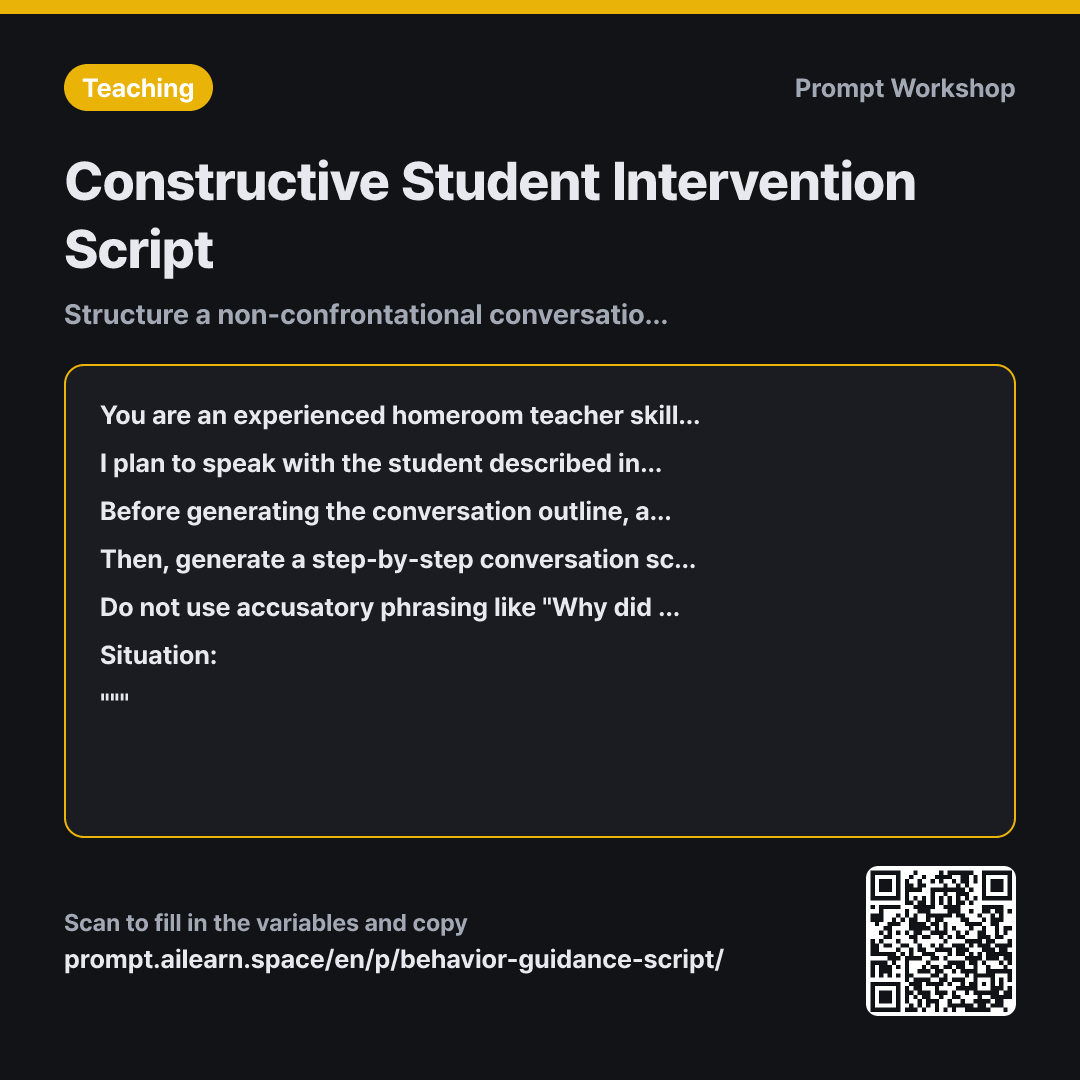
When asking AI for student behavioral guidance, it usually returns generic lecture points. Advice like "Explain the importance of following rules" may be technically correct, but what teachers actually need is the exact opening sentence to start the dialogue. Entering a conversation unprepared often leads to emotional conflict rather than fact-finding, making future rapport much harder.
Narrowing the Role to a teacher who "addresses behavior firmly without cornering them" prevents two extremes: a generic counselor who only offers empathy without addressing the root behavior, and a disciplinarian who jumps straight to punitive procedures.
Including a Clarification step in the third paragraph is the core strength of this prompt. The conversation flow differs drastically depending on whether the behavior is a first-time offense or a recurring pattern, or if other peers are involved. Forcing the AI to ask clarifying questions before jumping to a script prevents it from making wrong assumptions about the classroom dynamics.
Structuring the Format into six steps places objective fact-checking before personal concerns. Expressing concern too early puts students in a defensive posture where they prepare excuses. Having the student set their own commitments leads to higher follow-through than teacher-imposed mandates. Finally, the Constraints forbid psychological assumptions, keeping the script grounded strictly in observable actions. Wrapping the situation in """ ensures the prompt parser treats the case notes solely as reference data.
Unfamiliar terms? See Aha AI: role-prompting, persona
Compared with a bad example
How do I deal with a student who keeps using their phone during class?
Produces generic advice. Suggestions to review classroom rules, call parents, or refer to counseling are already obvious. It leaves the teacher without a step-by-step dialogue script for this afternoon's meeting and fails to account for whether the behavior is repeated or unprecedented.
Variations
When Contacting Parents
I need to call a parent to discuss the situation below. Create a structured conversation flow focused on partnering with the parent to find a solution rather than merely reporting misconduct. 1) Opening greeting and clear reason for calling (1 sentence) 2) Objective summary of the facts — free of judgmental language 3) Actions already taken at school 4) One specific request for support at home 5) Next check-in timeline. Avoid labeling the student as problematic and do not mention other students by name.
""" {{current situation}} """
Parent calls require a different structure than student talks: facts come first, accompanied by a single focused request.
Post-Conversation Documentation
Please format the notes below into an objective incident/counseling record. Include the following sections: Date/Time, Incident Summary, Student Statements, Teacher Guidance Provided, Agreed Commitments, and Next Follow-up Date. Avoid subjective assessments of student attitude or character; record only observable behaviors and spoken statements. Leave sections blank if information is not available in the notes.
""" {{current situation}} """
Formal records may be reviewed by administrators or counselors later. It filters out subjective commentary, keeping only factual observations and agreements.
Model notes
Do not include student names, ID numbers, or school names; focus strictly on objective event descriptions. Keep this privacy practice when documenting records as well.
Related prompts
Last updated 2026-09-02 · Found a mistake? Let us know