Why it is written this way
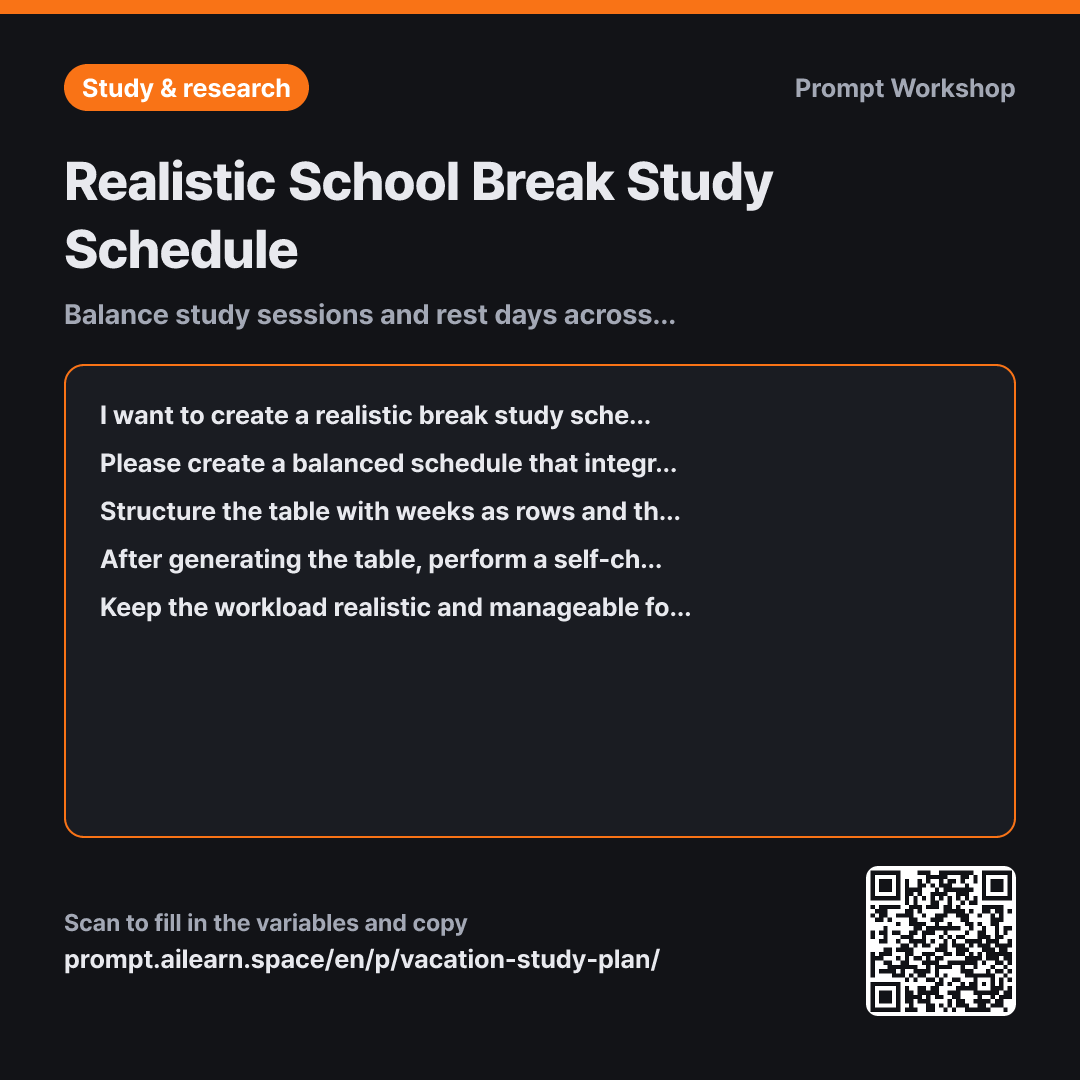
The most common reason school break schedules fail is over-scheduling. Timetables packed with tasks from 9 AM to bedtime feel satisfying to make, but they fall apart within three days—and once a student falls behind, the remaining four weeks are abandoned. This prompt explicitly builds rest days and buffer space into the schedule from the start.
The Context in the first paragraph specifies the grade level, duration, and target subjects. Knowing the grade level keeps the workload realistic, and providing the reasons for improvement targets specific weak areas rather than generic tasks like "study math." In the second paragraph, setting the Task constraint to a maximum of "three tasks per day" defines the core nature of the schedule. Without this limit, AI models tend to pack five or more tasks into each day.
The Format requirement of a "Catch-Up Plan" column is the backbone of this planner. Falling behind schedule is the default, not an exception, so having a predefined protocol for what to drop and what to catch up on keeps the schedule usable. Limiting the daily routine to three broad time blocks serves the same purpose. Minute-by-minute break schedules fail on day one.
The self-Check in the fourth paragraph forces the AI to audit its own output against the constraints. Having the model review its own work and explain fixes saves time compared to manually verifying task counts. Finally, the last paragraph prevents hallucinations and unnecessary complexity, such as curriculum standards or test-prep brand names that only add clutter.
Unfamiliar terms? See Aha AI: output-format, prompt
Compared with a bad example
Make a winter break study schedule for an 8th grader.
This results in a generic, rigid hourly routine—wake up at 9, math at 10, English at 2—repeated for five weeks straight. Without context on weak areas, time is divided evenly among generic subjects, and with zero rest days, it collapses by the first weekend. There is no guidance on how to recover from missed days, so the schedule is discarded within a week.
Variations
Daily Routine for Younger Elementary Kids
Please create a simple holiday daily routine for a {{student grade level}} child to follow alongside parents. The break duration is {{break duration}}.
Format it as one line per day so the child can easily check items off. Each day must include exactly one simple item from four areas: Learning · Physical Activity · Chores · Fun / Free Choice. Use kid-friendly language and keep each entry under 10 words. Keep one full day per week completely open with no assigned tasks.
For younger children, building habits is more important than study volume. This variation organizes the day by lifestyle habits rather than subjects and sets a strict character limit for readability.
Mid-Break Reset Plan
I am a {{student grade level}} student, and halfway through the break, I have fallen completely off schedule. The remaining time is the second half of {{break duration}}. My original focus areas were: {{target subjects to improve}}
Do not cram the overdue tasks into the remaining days. Instead, reset the plan: first, suggest the single most important objective that can realistically be finished in the remaining time, and list the rest under a "Postpone to Next Semester" list. Then, create a table covering only the remaining weeks.
Cramming missed work into the remaining days leads to another failure. This variant focuses on reducing the scope down to a single realistic goal.
Model notes
AI models often misalign weekdays and calendar dates. Check the first week against a real calendar; if the days do not match, reply with: "Please check what day of the week the break begins and recreate the table with the correct calendar alignment."
Related prompts
Last updated 2026-09-02 · Found a mistake? Let us know